🔗 Affiliate Disclosure: As an Amazon Associate, Tech Rig Review earns from qualifying purchases. Links on this page may be affiliate links — at no extra cost to you.
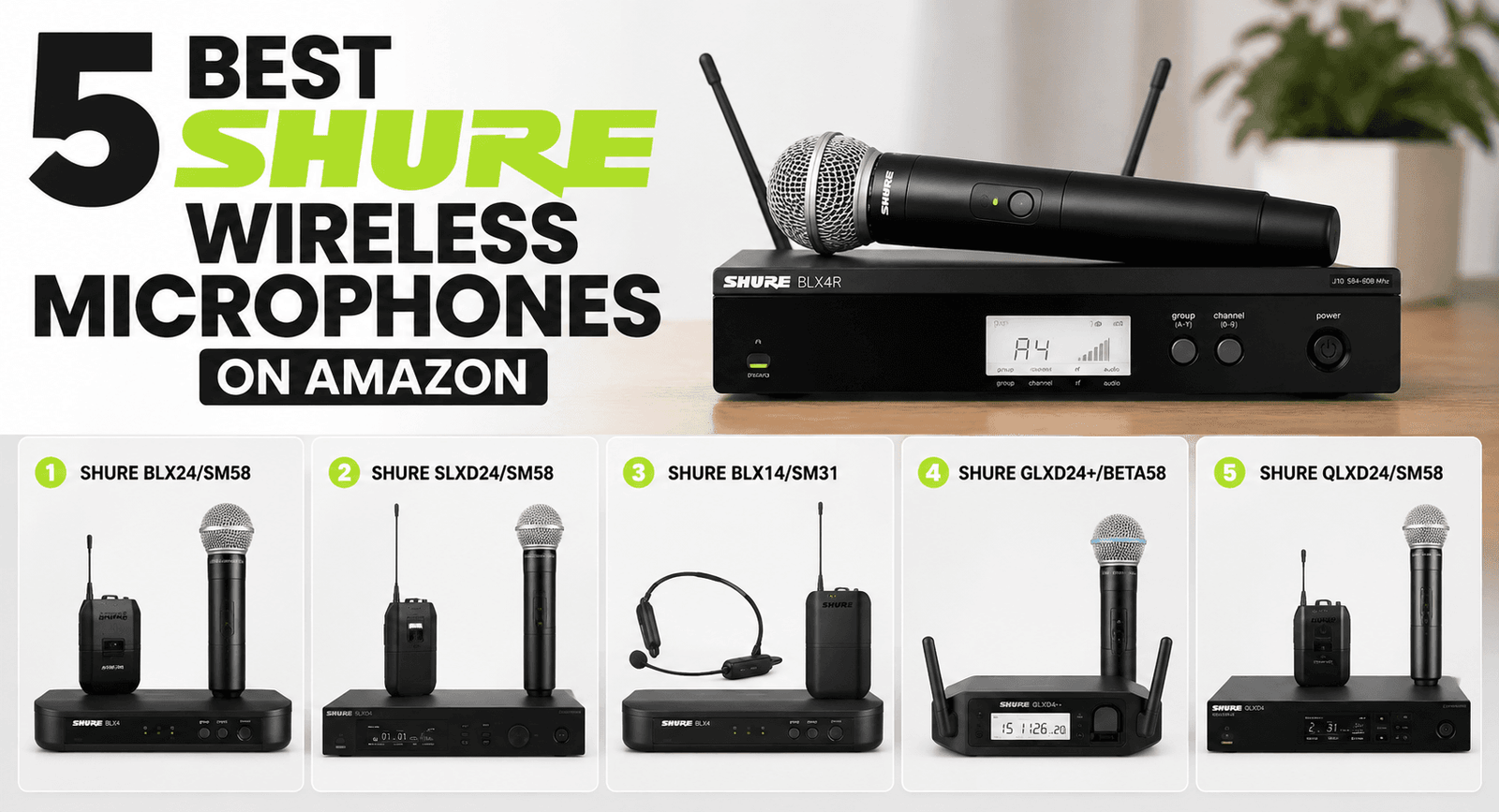
Looking for the best Shure wireless microphone on Amazon? Compare five Shure systems for vocals, events, churches, presentations, and live performance.
If you want a reliable Shure wireless microphone on Amazon, you have several strong choices — the hard part is knowing which system actually fits your needs.
Shure makes wireless systems for singers, speakers, presenters, churches, events, and professional stages. Some use the popular SM58 capsule, others the Beta 58A. Some are simple analog UHF systems; others use newer digital wireless technology.
The five picks here aren’t just five versions of the same microphone — each has a different reason to buy it:
- The BLX24/SM58 is the straightforward choice for a proven SM58 wireless setup
- The BLX24/B58 moves up to Shure’s Beta 58A capsule
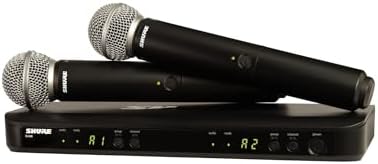
- The BLX288/SM58 is designed for two people who need two wireless handheld microphones
- The SLXD24/SM58 is the more advanced digital option for stronger RF performance and professional features
- The GLXD24+/SM58 brings Shure’s newer dual-band GLX-D+ platform to the familiar SM58 capsule
Research note: This is a research-based guide. I did not personally purchase or hands-on test these systems. Product details were checked against Shure’s official documentation and current Amazon listings. Amazon inventory and sellers can change, so verify the live listing before purchasing.
Table of Contents



Quick Comparison
| Product | Best For | Key Feature | Buyer Sentiment |
|---|---|---|---|
| Shure BLX24/SM58 | Singers and presenters | SM58 + simple UHF wireless | Established, well-reviewed listing |
| Shure BLX24/B58 | Vocal performers | Beta 58A capsule | Strong interest among live-vocal buyers |
| Shure BLX288/SM58 | Two performers | Two SM58 transmitters | Established dual-mic option |
| Shure SLXD24/SM58 | Professional live use | 24-bit digital wireless | Strong interest for professional applications |
| Shure GLXD24+/SM58 | Modern digital wireless | Dual-band wireless + SM58 | Established option with strong feature appeal |
Availability note: Active Amazon product pages were found for all five selections during research. Amazon inventory and sellers can change, so check the live listing before purchasing.
1. Shure BLX24/SM58
Best Overall
If you want a Shure wireless microphone without an unnecessarily complicated setup, the BLX24/SM58 is one of the easiest systems to understand. The package combines a Shure BLX wireless receiver with a BLX2 handheld transmitter fitted with the famous SM58 vocal capsule. Shure lists up to 300 feet of range and up to 14 hours of transmitter battery life on two AA batteries.
You get the familiar sound and design of the SM58 while removing the cable between performer and receiver — a system that works well for live vocals, presentations, houses of worship, public speaking, and small-to-medium performance setups. The BLX platform focuses on simple operation, with a one-touch scan and selection system designed for quick setup. For many users, the goal is simple: turn on the receiver, turn on the transmitter, select a usable frequency, plug into the sound system, and go.
Key specs: BLX wireless system · SM58 capsule (dynamic vocal) · UHF transmission · up to 300 ft/100m range · 2× AA batteries · up to 14 hours battery life · single-channel BLX receiver
| ✅ Pros | ❌ Cons |
|---|---|
| Legendary SM58 vocal capsule | Analog wireless platform, not the newest digital tech |
| Simple wireless setup | Single handheld microphone |
| Good fit for singers and presenters | Frequency-band selection matters |
| Long claimed AA battery life | Not ideal if you need advanced wireless features |
| Useful range for many venues | Professional users may prefer SLX-D or GLX-D+ |
| Easier to operate than more advanced digital systems |
Who should buy it: singers, public speakers, church presenters, event hosts, small-stage performers, karaoke/entertainment users, and anyone upgrading from a basic wired microphone — also a sensible pick if you’re already in the Shure ecosystem.
Who should skip it: demanding RF venues or anyone wanting a newer digital platform (look at SLX-D or GLX-D+); or if two performers need microphones simultaneously (look at the BLX288/SM58).
🔗 Check the Shure BLX24/SM58 on Amazon
2. Shure BLX24/B58
Best for Live Vocal Performance
Uses the same basic BLX wireless platform as the BLX24/SM58, but swaps the capsule for Shure’s Beta 58A — a difference that matters to singers who prefer its vocal character and supercardioid design. Shure lists the same up to 300 feet of range and up to 14 hours of battery life on two AA batteries.
The Beta 58A is often chosen for live vocals where more focused pickup is useful — its supercardioid pattern can help isolate the vocalist from some surrounding sound, though microphone technique and speaker placement still matter (a different polar pattern doesn’t magically eliminate feedback). The main reason to choose this over the BLX24/SM58 isn’t the wireless receiver, which is broadly similar — it’s the microphone capsule itself.
Key specs: BLX wireless system · Beta 58A capsule (handheld vocal, supercardioid) · up to 300 ft/100m range · 2× AA batteries · up to 14 hours battery life · single-channel BLX receiver
| ✅ Pros | ❌ Cons |
|---|---|
| Beta 58A vocal capsule | More specialized than the SM58 version |
| Focused supercardioid pickup | Still based on the BLX platform |
| Simple BLX wireless setup | Frequency band must match your region/setup |
| Long AA battery life | Single wireless microphone |
| Good fit for singers | Not the newest digital Shure platform |
BLX24/B58 vs. BLX24/SM58: the two systems share the same general BLX concept — the major difference is the capsule. Choose the SM58 version for the classic, widely used Shure vocal microphone; choose the Beta 58A version for its more focused pickup and vocal presentation. Neither is automatically better for every singer — your voice, technique, stage setup, monitors, speakers, and room acoustics all affect the result.
Who should buy it: lead singers, worship leaders, live vocalists, event performers, and speakers who prefer the Beta 58A specifically, in small and medium venues.
🔗 Check the Shure BLX24/B58 on Amazon
3. Shure BLX288/SM58
Best for Two Performers
Buying two separate wireless microphone systems can get expensive and complicated — that’s why the BLX288/SM58 earns a spot here. It’s a dual wireless vocal system: instead of one SM58 handheld transmitter, you get two SM58 wireless microphones working with a dual-channel receiver. Shure lists up to 300 feet of range and up to 14 hours of transmitter battery life on two AA batteries per transmitter.
Useful for two singers, wedding presenters, two event hosts, interviews, church services, school events, corporate presentations, karaoke, and small stage productions. The advantage isn’t just the two microphones — the receiver is designed specifically for two wireless channels, so the system is built around the two-person use case, making setup cleaner than trying to combine two unrelated wireless systems.
Key specs: BLX wireless system · two SM58 capsules included · dual-channel BLX88 receiver · up to 300 ft/100m range · 2× AA batteries per transmitter · up to 14 hours battery life per transmitter
| ✅ Pros | ❌ Cons |
|---|---|
| Two SM58 wireless microphones | More equipment than a single-mic system |
| Dual-channel receiver | Larger setup than a one-channel kit |
| Excellent for two performers | Frequency planning matters as you add systems |
| Familiar SM58 vocal sound | BLX is not Shure’s most advanced digital platform |
| Simple BLX setup, long battery life | Two microphones unnecessary for solo users |
Why two microphones can beat two separate systems: running an event with two speakers usually means coordinating frequencies and equipment across two separate kits. A dual-channel system is designed around this exact situation — the BLX288/SM58 gives you two handheld transmitters and a receiver built for the pair. If you only need one microphone, a single-channel system still makes more sense.
For church and events: a dual handheld system is useful when a second microphone needs to stay ready for another performer, or for presenters who move around a room instead of staying at a lectern.
Who should buy it: anyone needing two wireless vocal microphones — two singers, two presenters, event or church microphones, karaoke, or a simple dual-channel Shure setup.
🔗 Check the Shure BLX288/SM58 on Amazon
4. Shure SLXD24/SM58
Best for Professional Digital Wireless
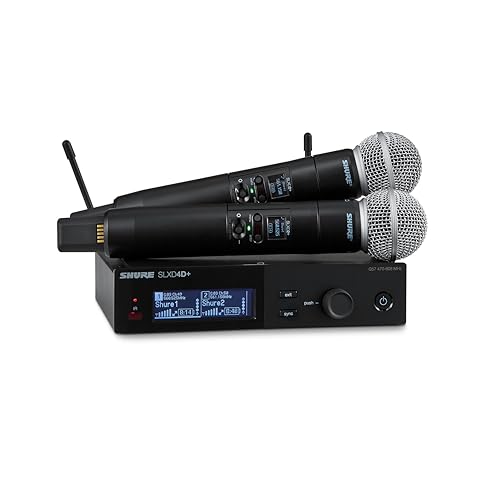
This is where the comparison moves into a more advanced class of wireless system — combining the SM58 capsule with Shure’s SLX-D digital wireless platform. Shure describes SLX-D as built around transparent 24-bit digital audio and strong RF performance, supporting a wide range of configurations.
This system makes more sense when wireless reliability and system expansion matter more than simple plug-and-play operation — for example, a professional venue running several wireless microphones at once, which creates a more difficult RF environment. Shure lists a working range of up to 100 meters/328 feet under suitable conditions, 24-bit digital audio, and system latency of 3.2 ms. You’re not just paying for a microphone here — you’re paying for a more advanced wireless system.
Key specs: SLX-D digital wireless platform · SM58 capsule · 24-bit digital audio · up to 100m/328 ft range (conditions dependent) · 3.2 ms latency · SLXD4 receiver, SLXD2 transmitter
| ✅ Pros | ❌ Cons |
|---|---|
| 24-bit digital wireless audio | More complicated than BLX |
| Advanced RF design, professional-oriented | Higher-end system may be unnecessary for casual users |
| SM58 capsule, low listed latency | Frequency band selection is important |
| Suitable for larger, demanding setups | Requires more understanding of wireless systems |
| Expandable SLX-D ecosystem | Higher purchase commitment than entry-level options |
SLX-D vs. BLX: BLX is designed around straightforward operation; SLX-D is designed for more demanding wireless applications. Neither is “bad” — they serve different buyers. A wedding speaker using one microphone may be perfectly happy with BLX; a venue managing several wireless systems has a much stronger reason to choose SLX-D. Think of the SLXD24/SM58 as SM58 vocal microphone + SLX-D wireless platform — the capsule doing the vocal capture is the same one you already know; the wireless architecture around it is more advanced.
Is it too much for home use? Possibly — occasional karaoke or a few family events probably don’t need this level of system. But if you perform regularly, run events, work as a presenter, or manage professional audio equipment, the added wireless capability makes more sense.
Who should buy it: professional singers, event companies, churches with larger audio systems, conference venues, corporate presenters, professional DJs, stage performers, and production teams.
🔗 Check the Shure SLXD24/SM58 on Amazon
5. Shure GLXD24+/SM58
Best Modern Dual-Band Wireless System
Another option for moving beyond basic BLX wireless — this system uses Shure’s newer GLX-D+ platform with the SM58. Its key difference is dual-band wireless architecture: Shure says GLX-D+ operates across 2.4 GHz and 5.8 GHz, with automatic frequency management designed to maintain reliable operation. It also lists up to 12 hours of operation from a rechargeable lithium-ion battery.
That’s a real character shift from BLX — instead of disposable AA batteries, GLX-D+ uses rechargeable power, which can be more convenient for regular performers who use their wireless microphone several times a week. The dual-band design is also useful in environments where the 2.4 GHz spectrum may be crowded, since GLX-D+ can shift into the 5.8 GHz band and manage frequencies automatically.
Key specs: GLX-D+ dual-band digital wireless · SM58 capsule · 2.4 GHz and 5.8 GHz bands · automatic frequency management · rechargeable lithium-ion battery · up to 12 hours battery life · GLXD4+ receiver, GLXD2+/SM58 transmitter
| ✅ Pros | ❌ Cons |
|---|---|
| Familiar SM58 vocal capsule | More expensive than basic BLX options |
| Newer GLX-D+ wireless platform | Rechargeable battery requires charging |
| Dual-band operation | More advanced than some casual users need |
| Automatic frequency management | Wireless conditions still affect performance |
| Rechargeable battery, up to 12 hrs | Exact configuration/regional availability matter |
GLX-D+ vs. BLX: BLX is straightforward; GLX-D+ is more modern and automated. If you’re buying your first wireless microphone for occasional use, BLX may be enough. If you perform regularly and want rechargeable operation plus dual-band wireless, GLX-D+ becomes more interesting.
The rechargeable trade-off: not automatically better for everyone — it depends on your workflow. If you use the microphone every weekend, rechargeable power is convenient (just remember to charge before an important event, and have a backup plan for professional use). If you use it twice a year, replaceable AA batteries may actually be easier to manage.
Who should buy it: working musicians, worship teams, event presenters, professional speakers, DJs, and regular performers who want rechargeable operation with automatic frequency management.
🔗 Check the Shure GLXD24+/SM58 on Amazon
Shure Wireless Microphone Buying Guide
Choosing a Shure wireless microphone is easier when you stop looking at model names and start looking at your actual use. Five questions to ask first:
1. Do you need one microphone or two? If only one person needs a mic, a single-channel system (BLX24/SM58, BLX24/B58, SLXD24/SM58, or GLXD24+/SM58) makes sense. If two people need microphones at the same time, the BLX288/SM58 becomes much more interesting — don’t buy a dual system just because it sounds like a better deal if the second transmitter will sit unused.
2. SM58 or Beta 58A? The SM58 is a cardioid dynamic microphone intended for vocals and speech, one of the most recognized designs in professional audio. The Beta 58A is a supercardioid dynamic vocal microphone with a narrower pickup pattern, useful on stage but still dependent on placement. If you’re not sure which capsule you prefer, the SM58 is the safer general-purpose choice; if you already know you prefer the Beta 58A, the BLX24/B58 gives you that capsule wirelessly.
3. How important is wireless technology?
| Platform | Best for |
|---|---|
| BLX | Straightforward operation — a professional Shure system without jumping into advanced wireless infrastructure |
| GLX-D+ | Regular performers who want dual-band operation, automatic frequency management, and rechargeable batteries |
| SLX-D | Demanding professional applications — 24-bit digital audio, strong RF performance, and a broad expandable ecosystem |
4. What is your venue like? Wireless performance depends on distance, walls, people, metal objects, other wireless equipment, RF congestion, receiver placement, and frequency selection. Don’t treat a manufacturer’s maximum range as a promise for every real-world situation — Shure itself notes actual range depends on the environment. For best results, place the receiver with a clear path toward the transmitter whenever possible.
5. AA batteries or rechargeable power? This sounds minor but isn’t:
- BLX (AA batteries): up to 14 hours listed — if batteries run out, you can replace them quickly, no charging required
- GLX-D+ (rechargeable lithium-ion): up to 12 hours listed — convenient for regular use, but you need to remember to charge it. Easy for weekly performers; replaceable batteries may be more convenient if you only use the microphone a few times a year.
Which Shure Wireless Microphone Should You Buy?
Best Overall: BLX24/SM58 — dependable Shure wireless without unnecessary complexity. The SM58 capsule is familiar, versatile, and appropriate for many vocal and speech applications.
Best for Singers Who Prefer Beta 58A: BLX24/B58 — the wireless system is similar to the BLX24/SM58, but the microphone capsule gives you a different pickup design.
Best for Two People: BLX288/SM58 — the dual-channel receiver and two SM58 transmitters make the use case clear.
Best for Professional Digital Wireless: SLXD24/SM58 — choose this when wireless performance, digital audio, and system expansion matter more than simplicity.
Best Modern Rechargeable Option: GLXD24+/SM58 — the SM58 capsule with dual-band wireless, automatic frequency management, and rechargeable operation.
How Shure Compares With Other Wireless Microphone Options
Shure isn’t the only company making wireless microphones — Sennheiser, RØDE, DJI, Audio-Technica, Sony, and others make excellent systems too. The right choice depends on the type of microphone you need. If you’re mainly recording video with an iPhone or camera, a compact wireless lavalier system may be more practical than a handheld stage microphone. If your main goal is live singing, a Shure handheld system makes much more sense.
Building a broader recording setup? See 10 Best Amazon Microphones for Computer for USB and desktop microphone choices, 10 Best Amazon Vlogging Equipment for Beginners for video creation, or 10 Best Amazon Wireless Microphones Under $90 for compact wireless systems — a Shure handheld system and a small camera wireless microphone solve different problems.
FAQ
Are Shure wireless microphones good?
Yes. Shure has a long history in professional microphones and wireless systems, offering products across several price and performance levels, from straightforward BLX systems to more advanced digital platforms like SLX-D and GLX-D+. The important part is choosing the right system for your use.
What is the best Shure wireless microphone on Amazon?
For most buyers, the Shure BLX24/SM58 is the easiest recommendation — a familiar SM58 microphone with a relatively straightforward BLX wireless system. For professional digital wireless, the SLXD24/SM58 is stronger. For two performers, the BLX288/SM58 is more practical.
Is the Shure SM58 good for wireless microphones?
Yes. It’s a dynamic vocal microphone capsule widely used for singing and speech, and Shure uses it across several wireless systems, including BLX, GLX-D+, and SLX-D configurations.
Is Shure BLX better than GLX-D+?
Not for everyone. BLX is simpler and uses AA batteries. GLX-D+ offers newer dual-band digital wireless technology, automatic frequency management, and rechargeable operation. For basic use, BLX may be enough; for regular performance and modern features, GLX-D+ can be the better fit.
Is Shure SLX-D better than BLX?
SLX-D is the more advanced wireless platform — 24-bit digital audio, professional RF capabilities, and extensive system configurations. But “better” depends on the user: a casual presenter may not need those extra capabilities, while a professional production team may benefit greatly.
How far can a Shure wireless microphone work?
Shure lists up to 300 feet/100 meters for BLX under suitable conditions, and the SLX-D platform is listed at up to 100 meters/328 feet. Real-world range can be lower due to walls, people, interference, and receiver placement.
Does the Shure BLX24/SM58 use rechargeable batteries?
No — the BLX transmitter uses two AA batteries, with up to 14 hours of listed operation. For rechargeable operation, consider a GLX-D+ system instead.
Is the Shure Beta 58A better than the SM58?
Neither is automatically better for every singer. The Beta 58A uses a supercardioid pickup pattern, the SM58 uses a cardioid pattern — that changes how each responds to surrounding sound. Your voice, technique, stage monitors, and room all matter more than the spec sheet alone.
Can I use a Shure wireless microphone for public speaking?
Absolutely — the SM58 is useful for speech as well as singing, and Shure’s wireless systems are positioned for presenters, events, houses of worship, and other speech applications, not just musicians.
Can I use a Shure wireless microphone for karaoke?
Yes, when connected to a compatible mixer, amplifier, or PA system. For occasional home karaoke, though, a professional Shure system may be more than you need — the value becomes clearer when sound quality, reliability, and durability matter more.
Do I need a mixer for a Shure wireless microphone?
Usually you need some compatible audio input device — a mixer, powered speaker, PA system, amplifier, or audio interface. Check the receiver’s available outputs against your existing equipment’s inputs before purchasing.
Final Verdict
There’s no single Shure wireless microphone that’s perfect for everyone — the best choice depends on how you plan to use it.
For most people, start with the Shure BLX24/SM58 — the familiar SM58 vocal capsule with a straightforward wireless platform, sensible for singers, presenters, churches, events, and many small-to-medium performance setups. If you prefer the Beta 58A, the BLX24/B58 is the better match. If two people need wireless microphones, the BLX288/SM58 makes much more sense than buying a single system. For a more advanced digital wireless platform, the SLXD24/SM58 is the step-up option. And for performers who want modern dual-band wireless with rechargeable power, the GLXD24+/SM58 is an attractive choice.
The key is not to buy the most expensive Shure system simply because it’s more advanced — buy the system that matches your venue, number of microphones, performance needs, and wireless experience.
Check the current listings:
Research Sources
Product specifications and system information were cross-checked against Shure’s official product documentation, including its BLX, GLX-D+, and SLX-D product pages. Amazon product pages were checked during research for the five recommended models — because Amazon inventory, sellers, and product configurations can change, verify the live listing immediately before purchase.
Amazon Associates Disclosure: As an Amazon Associate I earn from qualifying purchases.

MD.HASAN is an experienced SEO expert and amazon products review writer passionate about helping people find right products on amzon for buy without confusion. With 4 years of hands-on experience in content strategy and search engine optimization, he specializes in writing SEO-friendly blog posts that rank, engage, and convert.