🔗 Affiliate Disclosure: As an Amazon Associate, Tech Rig Review earns from qualifying purchases. Links on this page may be affiliate links — at no extra cost to you.
Discover the 10 best Amazon vlogging cameras at a cheap price. Compare features, video quality, and value to find the perfect camera for your content.
Starting a YouTube channel, a TikTok account, or a travel vlog in 2026 no longer means draining your savings on a professional cinema rig. Some of the sharpest, most reliable content creators online right now are shooting with compact, affordable gear they picked up on Amazon — cameras small enough to fit in a jacket pocket but capable of 4K footage that looks genuinely cinematic.
If you’ve been scrolling through hundreds of listings trying to figure out which Amazon vlogging camera is actually worth your money, this guide will save you hours of research. Below, we break down the 10 best budget-friendly vlogging cameras available on Amazon right now, with an honest look at what each one does well, where it falls short, and who it’s really built for.
A quick note before we dive in: because pricing on Amazon changes frequently — often daily — we won’t be quoting specific dollar figures in this article. Instead, we’ll point you to check the live price directly on the product page, which is also the only way to see current deals, lightning offers, and bundle discounts.
Table of Contents
Comparison Table
| Camera | Sensor | Best For | Zoom Lens | Flip Screen |
|---|---|---|---|---|
| Sony ZV-1F | 1-inch | Overall budget pick | No | Yes |
| DJI Osmo Pocket 3 | 1-inch | Gimbal stabilization | No | Rotating touchscreen |
| Canon PowerShot V10 | 1-inch | Vertical/desk vlogging | No | Small fixed |
| Nikon Z30 | APS-C | Interchangeable lenses | Kit lens | Yes |
| Canon EOS R50 | APS-C | Talking-head YouTube | Kit lens | Yes |
| Sony ZV-1 | 1-inch | All-around versatility | Yes (2.9x) | Yes |
| GoPro HERO13 Black | 1/1.9-inch | Action/outdoor | No | Front-facing |
| Insta360 X5 | Dual 1/1.28-inch | 360° travel content | No | Yes |
| Panasonic Lumix G7 | Micro Four Thirds | Cinematic manual control | Kit lens | Yes |
| Sony ZV-E10 II | APS-C | Growth-ready mirrorless | Kit lens | Yes |
Specifications are provided for general comparison. Always confirm current specs and available bundles on each product’s Amazon listing before purchasing.
How We Chose These Cameras


Before jumping into the list, it helps to know what actually separates a good vlogging camera from a mediocre one. We evaluated every camera on this list using the same criteria real content creators care about:
- Autofocus reliability — Does it lock onto your face and stay there, even while you’re walking or talking with your hands?
- Stabilization — Can you walk and talk without the footage looking like an earthquake?
- Video quality — 4K is the baseline in 2026; anything less simply won’t hold up on YouTube or Instagram.
- Audio — Built-in stereo mics and, ideally, a 3.5mm input for external microphones.
- Screen — A flip-out or vari-angle screen so you can frame yourself properly.
- Size and weight — Vlogging cameras live in a bag or a pocket, so bulk matters.
- Battery life — Long recording sessions shouldn’t mean carrying five spare batteries.
- Price-to-performance ratio — This list is specifically about cheap, budget-conscious options, so we prioritized cameras that punch above their price bracket.
With that out of the way, here are the 10 best vlogging cameras you can buy on Amazon right now.
1. Sony ZV-1F — Best Overall Budget Vlogging Camera

- Ultra-wide 20mm lens gets it all in the frame, even at arm’s length
- Large 1” sensor and F2 lens, for low-light and defocusing backgrounds
- Stay focused with Eye-AF and autofocus tracking technology
The Sony ZV-1F is one of the most talked-about entry-level vlogging cameras of the past two years, and for good reason. It’s built around a 1-inch, 20.9-megapixel sensor paired with an 18mm-equivalent f/2.8 prime lens — essentially a wide-angle lens that’s perfect for arm’s-length selfie vlogging where you need to fit yourself and the background in the same shot.
It records 4K at 30 frames per second and 1080p at up to 60fps, has a fully articulating 2-inch flip screen, and includes a built-in stereo microphone along with a 3.5mm input if you want to upgrade your audio later. Sony also included their well-regarded Product Showcase mode, which instantly shifts focus from your face to any object you hold up — genuinely useful for unboxing videos and product reviews.
What we like:
- Excellent face-tracking autofocus, one of the best in this price range
- Compact and lightweight enough to hold one-handed for long periods
- Background Defocus button for instant bokeh on demand
- Built-in wind screen included in the box
What to watch out for:
- Fixed lens means no zoom and no digital IS beyond basic electronic stabilization
- No in-body image stabilization (IBIS), so handheld walking shots can show some shake
- Battery life is on the shorter side, so a spare battery is a smart add-on
Best for: New vloggers who want proven autofocus and simplicity without learning a complicated menu system.
2. DJI Osmo Pocket 3 — Best Gimbal-Stabilized Vlogging Camera
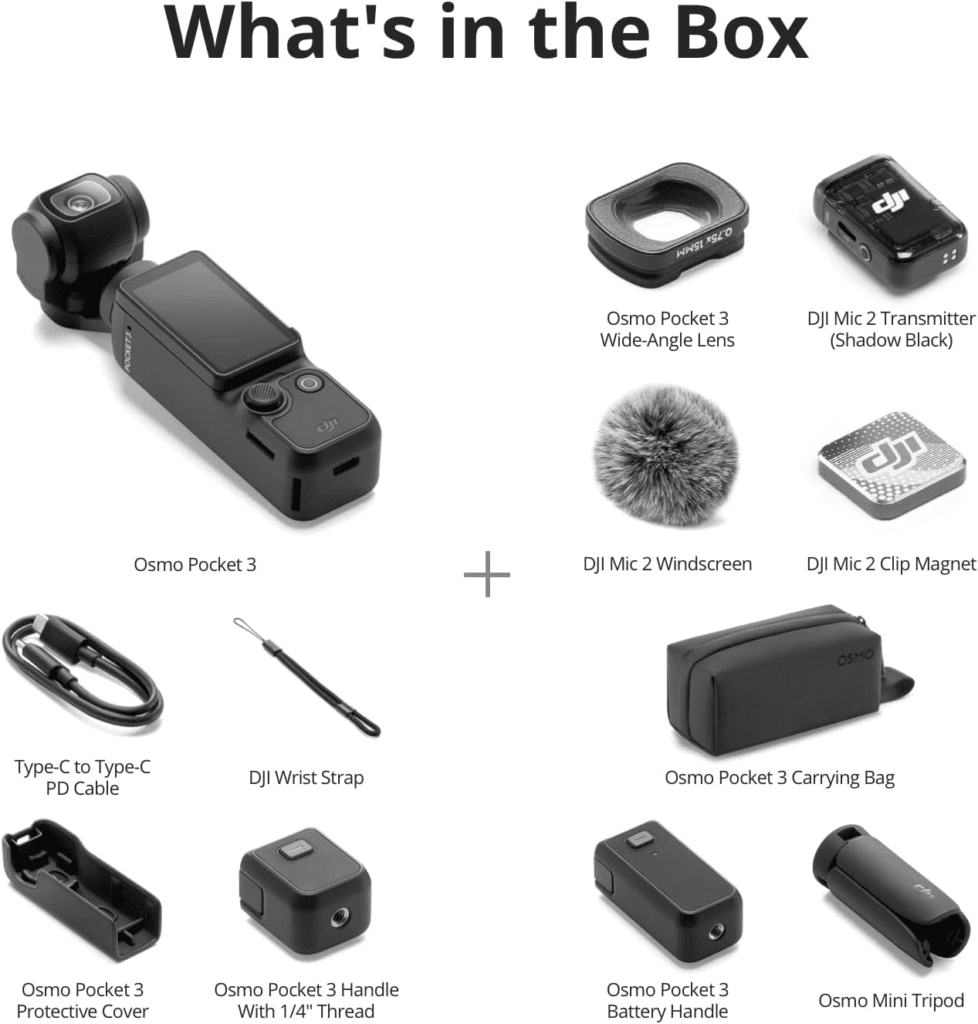
If shaky footage is the single biggest thing holding your videos back, the DJI Osmo Pocket 3 solves that problem better than almost anything else on this list. It’s a 3-axis mechanical gimbal built into a palm-sized body, meaning your footage stays smooth even while walking, jogging, or filming in a moving car.
It uses a 1-inch sensor, shoots 4K at up to 120fps for slow motion, and has a rotating touchscreen that flips vertically for TikTok and Instagram Reels content without needing to crop later. It also pairs with DJI’s wireless microphones over Bluetooth, so you can get clean audio without cables or a separate receiver.
What we like:
- Genuinely the smoothest handheld footage of any camera at this price
- Native vertical shooting mode — a huge time-saver for short-form creators
- Touchscreen interface is intuitive even for total beginners
- ActiveTrack keeps you in frame automatically, even solo
What to watch out for:
- Fixed lens means you can’t get true wide establishing shots
- Battery life is modest during 4K/60 recording
- Best paired with the Creator Combo accessory kit for serious use
Best for: Walk-and-talk vloggers, travel creators, and anyone who films while moving.
3. Canon PowerShot V10 — Best for Vertical, Hands-Free Vlogging

- Compact Powerhouse: Canon PowerShot V10 vlogging camera features a sleek, pocket-sized design; perfect for on-the-go cre…
- Versatile Vlogging Camera: Incredible low-light capabilities with a 15.2-megapixel 1-inch back-illuminated CMOS sensor; …
- Adaptable Built-In Stand: Comes with an innovative stand that folds in both the front or back; content creator camera wi…
Canon designed the PowerShot V10 specifically around how people actually vlog in 2026 — vertically, on the go, and often hands-free. It has a genuinely clever design with a fold-out kickstand built into the body, so you can prop it on a table or counter and start recording without a tripod.
Inside is a 1-inch, 20.1-megapixel sensor with an 18mm-equivalent lens, and it shoots clean 4K/30p video with Canon’s flattering, warm color science that a lot of beauty and lifestyle creators prefer over Sony’s cooler tones.
What we like:
- Built-in stand means zero extra accessories needed for desk-based vlogging
- Native vertical recording, ideal for Shorts, Reels, and TikTok
- Simple one-button livestreaming to YouTube and other platforms
- Genuinely pocketable at under 8 ounces
What to watch out for:
- No optical zoom and no IBIS
- Screen is small compared to competitors
- Not ideal if most of your content is horizontal, long-form YouTube
Best for: Creators who primarily shoot vertical, short-form content or livestream from a desk.
4. Nikon Z30 — Best Budget Interchangeable-Lens Camera


The Nikon Z30 is where this list starts moving into “grows with you” territory. Unlike the fixed-lens compacts above, the Z30 uses Nikon’s Z-mount system, meaning you can start with the affordable kit lens and gradually add wide-angle, portrait, or macro lenses as your channel grows.
It has a APS-C sized sensor (much larger than the 1-inch sensors in most compacts on this list), a fully vari-angle touchscreen, and no recording time limit, which matters if you do long tutorials or livestreams. Nikon also skipped the viewfinder entirely to keep the body small and lightweight — a deliberate design choice for vloggers who never use one anyway.
What we like:
- Larger APS-C sensor delivers noticeably better low-light performance and background blur
- No 4K recording time limit — genuinely unlimited clips
- Simple, beginner-friendly menu system
- Lightweight body that’s comfortable for one-handed selfie shots
What to watch out for:
- No IBIS, so you’ll want a stabilized lens or a gimbal for walking shots
- 4K is limited to 30fps (no 4K60)
- Kit lens is decent but not exceptional in low light
Best for: Beginners who want room to grow into a full interchangeable-lens system without overspending upfront.
5. Canon EOS R50 — Best for YouTube Talking-Head Videos
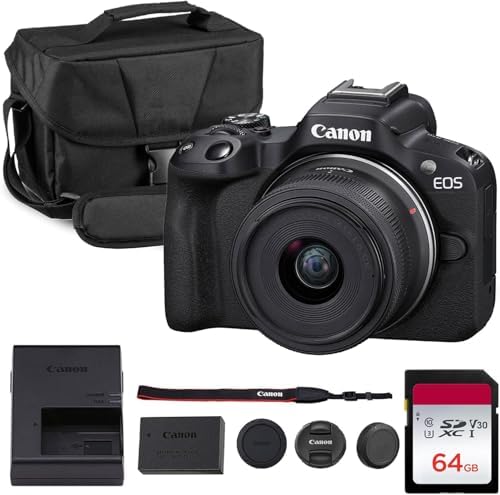


The Canon EOS R50 is a small mirrorless camera that punches well above its price point, especially for creators who film mostly sit-down, talking-head style content — think tutorials, commentary, reviews, and podcasts with video.
It uses a 24.2-megapixel APS-C sensor, Canon’s excellent Dual Pixel autofocus system, and a fully vari-angle screen. Canon’s skin tone rendering is a genuine strength here, which is part of why it’s become a favorite among beauty and lifestyle creators.
What we like:
- Outstanding autofocus, tracks eyes reliably even with fast movement
- Interchangeable lens system opens the door to better glass over time
- Excellent color science straight out of camera, minimal color grading needed
- Comfortable grip despite the compact size
What to watch out for:
- No IBIS, so handheld walking shots benefit from a stabilized lens
- Single SD card slot
- Slightly heavier than the pure point-and-shoot options on this list
Best for: YouTubers focused on sit-down or desk-based content who want DSLR-quality footage.
6. Sony ZV-1 — Best All-Rounder With a Zoom Lens


If the ZV-1F’s fixed wide lens feels too limiting, the standard Sony ZV-1 solves that with a versatile 24-70mm equivalent zoom lens and a bright f/1.8-2.8 aperture that performs well in dim lighting. It’s built on the same 1-inch sensor platform and shares the excellent autofocus and Product Showcase mode that made the ZV-1F so popular.
This is widely considered one of the most complete all-around vlogging cameras you can buy, because it handles everything from close-up product reviews to wider establishing shots without needing to switch gear.
What we like:
- Zoom flexibility that the ZV-1F lacks
- Class-leading real-time Eye AF for both stills and video
- Side-flipping screen avoids the classic “mic in the shot” problem
- 3.5mm mic input for easy audio upgrades
What to watch out for:
- Sits at the higher end of the “budget” bracket compared to others on this list
- Battery life is famously short — a second battery is nearly mandatory
- No IBIS, relying instead on digital stabilization that slightly crops the frame
Best for: Vloggers who want one camera to handle everything from run-and-gun filming to static product reviews.
7. GoPro HERO13 Black — Best for Outdoor and Action Vlogging


Not every vlog happens indoors or on a sidewalk. If your content involves hiking, biking, surfing, travel, or anything remotely physical, the GoPro HERO13 Black remains the gold standard for rugged, stabilized action footage.
It shoots up to 5.3K resolution, has genuinely excellent HyperSmooth stabilization that rivals gimbal footage, and is waterproof without a case — a huge convenience over older GoPro generations. The front-facing screen also makes it usable as a straightforward vlogging camera when you’re talking directly to it.
What we like:
- HyperSmooth stabilization is best-in-class for handheld action shots
- Waterproof and genuinely rugged, built for rough handling
- Huge ecosystem of mounts, cases, and accessories
- Interchangeable lens mods available for wider or more protected shooting
What to watch out for:
- Small sensor means it can’t match the low-light performance of the mirrorless options on this list
- Battery drains fast in 5.3K, especially in cold weather
- Wide-angle “GoPro look” isn’t ideal for every style of content
Best for: Travel vloggers, athletes, and anyone who films in unpredictable or rugged environments.
8. Insta360 X5 — Best for Immersive 360° Travel Content
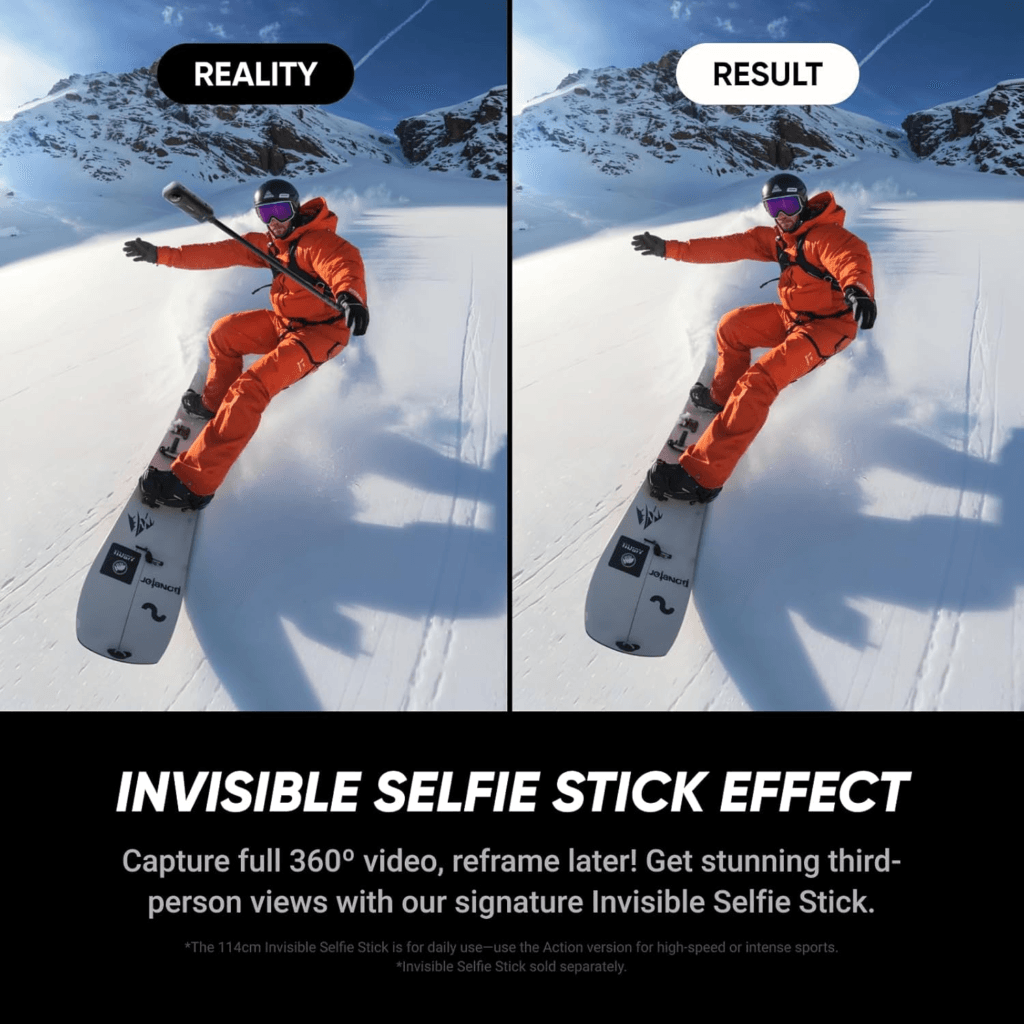
The Insta360 X5 takes a completely different approach from every other camera on this list: it films in full 360 degrees, then lets you “reframe” the footage into a normal-looking video afterward, choosing the angle in post-production. That means you never have to worry about framing yourself correctly while filming — the camera captures everything, and you decide the shot later.
It records at up to 8K 360 resolution and 5.7K60 in reframed mode, with genuinely impressive dynamic range for a camera this size. It also comes with an “invisible” selfie stick accessory that disappears from the final footage, giving you drone-like flying shots without an actual drone.
What we like:
- Never miss a shot — the whole scene is captured, so you can reframe later
- The invisible selfie stick trick genuinely looks incredible for travel content
- Waterproof design, built for outdoor adventure
- 72MP photo mode doubles as a capable travel camera
What to watch out for:
- Learning curve for reframing and editing 360 footage
- Files are large and require decent computer specs to edit smoothly
- Not ideal if you want a simple point-and-shoot experience
Best for: Adventure and travel vloggers who want a totally different, more dynamic visual style.
9. Panasonic Lumix G7 — Best for a Cinematic, Film-Style Look

- Professional photo and video: Performance: 16 megapixel micro four thirds sensor with no low pass filter to confidently …
- 4K video Capture: 4K QFHD video recording (3840 x 2160) with 3 unique 4K ultra HD video pause and save 4K photo modes ex…
- Intuitive Controls: Easily control aperture and shutter settings with the front and rear dials while making White balanc…
For vloggers chasing a more filmic, cinematic aesthetic rather than the crisp, clean look of most compacts, the Panasonic Lumix G7 remains a cult favorite years after its release, largely because it offers genuine 4K video and manual controls at a genuinely accessible price on the used and budget market.
It uses the Micro Four Thirds lens mount, which has one of the largest and most affordable lens ecosystems in the industry, meaning you can build out a full kit of primes and zooms without spending a fortune.
What we like:
- Full manual control over aperture, shutter, and ISO for a true “filmmaker” experience
- Micro Four Thirds lenses are widely available and generally inexpensive
- Fully articulating touchscreen
- 4K photo mode lets you extract high-res stills from video
What to watch out for:
- Autofocus is noticeably behind the newer Sony and Canon options on this list
- No headphone jack for audio monitoring
- Bulkier than the pocket-sized compacts higher on this list
Best for: Creators who want manual control and a cinematic look over point-and-shoot convenience.
10. Sony ZV-E10 II — Best Growth-Ready Mirrorless Vlogging Camera
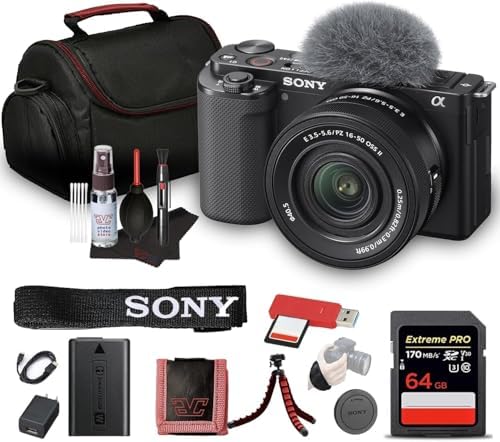
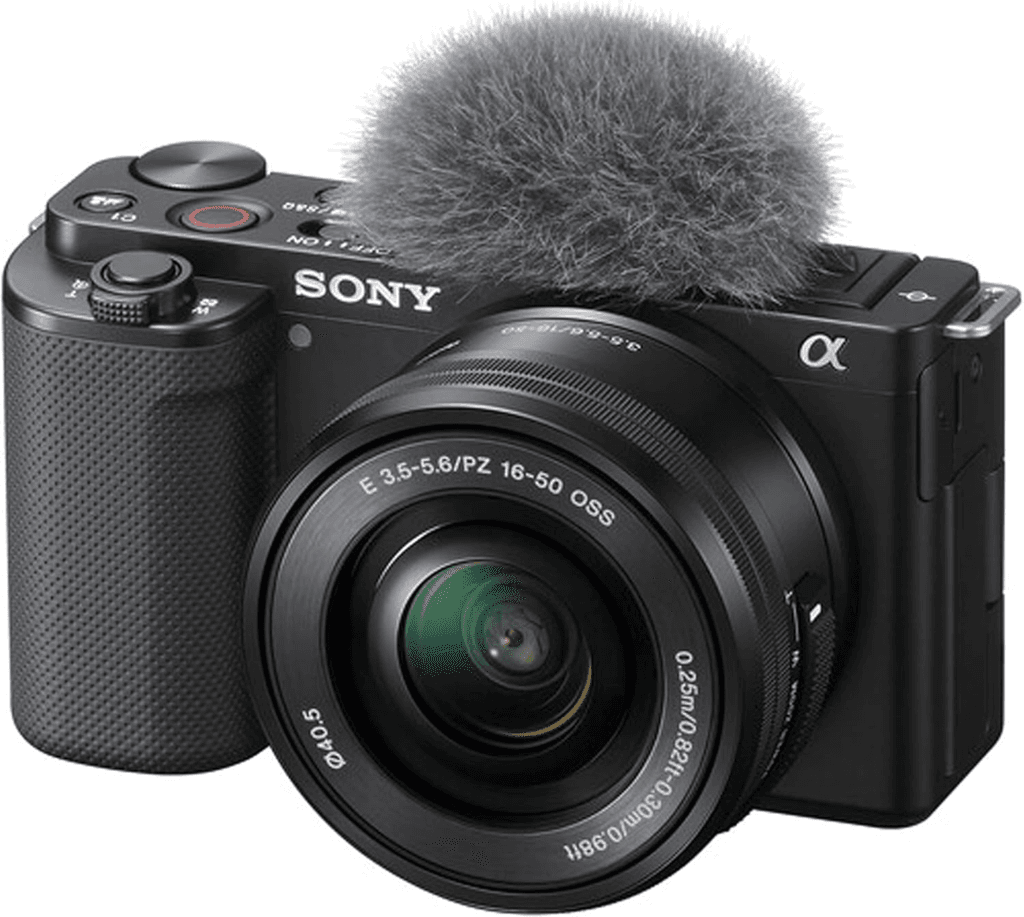
Rounding out the list is the Sony ZV-E10 II, the newest and most capable interchangeable-lens option here. It’s built specifically as a vlogging-first mirrorless camera, with a large APS-C sensor, 4K60 recording, and 10-bit color for creators who want more flexibility in editing and color grading.
It carries over everything that made the original ZV-E10 popular — the side-flip screen, Product Showcase mode, and background defocus button — while adding meaningfully better autofocus and video specs.
What we like:
- 4K60 with 10-bit color, a genuine step up in editing flexibility
- Access to Sony’s massive E-mount lens ecosystem
- Excellent subject tracking, even with fast or erratic movement
- Compact body despite the larger sensor
What to watch out for:
- Sits toward the top of the “budget” range, especially once you add a lens
- No viewfinder, which some hybrid photo/video shooters may miss
- Rolling shutter can show up in very fast pans
Best for: Creators who’ve outgrown a fixed-lens compact and want long-term flexibility.
How to Choose the Right Vlogging Camera for You
With ten solid options above, here’s a simple way to narrow it down based on your actual filming style:
If you mostly film yourself talking at arm’s length (walking tours, day-in-the-life content), prioritize a camera with a wide-angle lens and strong face tracking — the Sony ZV-1F or Canon PowerShot V10 are ideal.
If your footage involves a lot of walking or movement, stabilization matters more than anything else. The DJI Osmo Pocket 3 or GoPro HERO13 Black will save you hours of editing trying to smooth out shaky clips.
If you plan to grow into more advanced content — different lenses, better low-light performance, more manual control — start with an interchangeable-lens body like the Nikon Z30, Canon EOS R50, or Sony ZV-E10 II. Yes, they cost a little more upfront, but you won’t outgrow them in six months.
If you’re a travel or adventure creator, the Insta360 X5 or GoPro HERO13 Black will handle conditions that would damage or limit the more delicate compact cameras on this list.
If you’re chasing a specific cinematic aesthetic rather than a clean, corporate look, the Panasonic Lumix G7 gives you the manual controls to develop your own visual style.
Also Check:
Frequently Asked Questions
Do I need a 4K camera to start vlogging?
Not strictly, but it’s strongly recommended in 2026. 4K gives you the flexibility to crop into your footage for tighter framing or vertical reformatting without losing quality — something that’s become essential now that most platforms support Shorts, Reels, and long-form content side by side.
Is a flip screen really necessary?
For most vloggers, yes. Unless you’re exclusively using external monitors or shooting from a tripod with a remote, a flip or vari-angle screen is the easiest way to confirm you’re actually in frame and in focus before and while you’re recording.
Should I prioritize the camera or the microphone?
Honestly, audio matters more than most beginners expect. A cheap camera with clear, crisp audio will almost always outperform an expensive camera with muffled or echoey sound. Every camera on this list either has a 3.5mm mic input or supports wireless microphones, so budget for a decent mic alongside your camera if you can.
Can I use these cameras for both photography and vlogging?
Yes, particularly the interchangeable-lens options like the Nikon Z30, Canon EOS R50, Sony ZV-1, and Sony ZV-E10 II. These are genuinely capable stills cameras in addition to being built for video, so they’re a smart choice if you also want to shoot photos for Instagram or a portfolio.
Where’s the best place to check current prices and deals?
Prices on Amazon shift frequently due to promotions, lightning deals, and seasonal sales, so the listings linked throughout this article are the most reliable way to see accurate, up-to-date pricing rather than relying on numbers quoted in any article, including this one.
Final Thoughts
The best vlogging camera isn’t necessarily the most expensive one — it’s the one that matches how you actually create content and that you’ll genuinely want to pick up every day. Every camera on this list was chosen because it delivers real value without demanding a professional budget, whether that means class-leading autofocus, built-in gimbal stabilization, or the flexibility of an interchangeable lens system.
If you’re just getting started, the Sony ZV-1F or DJI Osmo Pocket 3 are the easiest entry points. If you already know you want room to grow, the Nikon Z30 or Sony ZV-E10 II will serve you well for years. Whichever you choose, be sure to check the live Amazon listing for current pricing, available bundles, and customer reviews before you buy.
This article contains affiliate links. As an Amazon Associate, we may earn from qualifying purchases at no additional cost to you.

MD.HASAN is an experienced SEO expert and amazon products review writer passionate about helping people find right products on amzon for buy without confusion. With 4 years of hands-on experience in content strategy and search engine optimization, he specializes in writing SEO-friendly blog posts that rank, engage, and convert.