🔗 Affiliate Disclosure: As an Amazon Associate, Tech Rig Review earns from qualifying purchases. Links on this page may be affiliate links — at no extra cost to you.
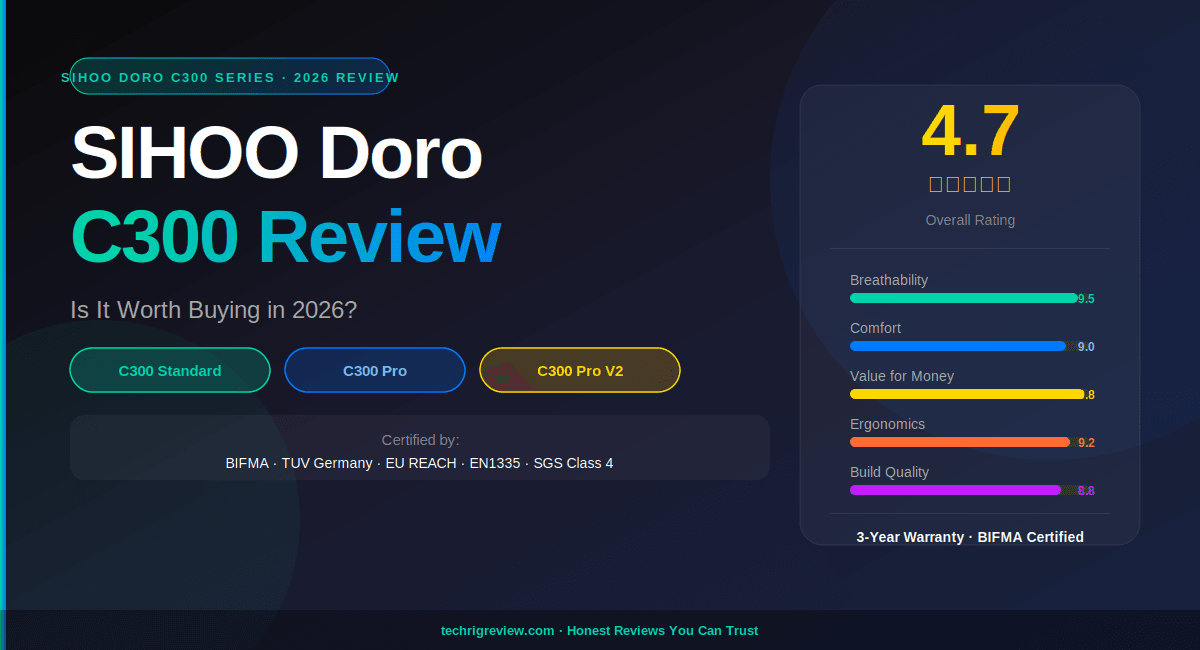
Read our SIHOO Doro C300 chairs review for 2026. Discover its comfort, ergonomic features, pros, cons, and whether it’s worth buying for your workspace.
If you’ve spent any time this year scrolling through “best office chair” roundups, you’ve probably run into the SIHOO Doro C300 family at least once. It’s become one of the most talked-about mesh ergonomic chairs on Amazon, and for good reason — SIHOO built a genuinely different-looking chair, priced it well below the big-name brands, then split it into three tiers (C300, C300 Pro, and C300 Pro V2) so shoppers can pick exactly how much ergonomic tech they want to pay for.
I put together this review after digging through hands-on testing notes, long-term usage reports, and verified buyer feedback across all three models, then cross-referencing that against the official specs SIHOO lists on Amazon. The goal is simple: tell you honestly whether a Doro C300 chair deserves a spot under your desk in 2026, which version fits your body and budget, and what actually to watch out for before you click “buy.”
Quick disclosure: SIHOO does not allow retailers to publish exact Amazon pricing in third-party content, and prices shift constantly with Lightning Deals and coupon codes anyway. So instead of quoting numbers that will be outdated by the time you read this, I’ll tell you where each chair sits relative to the others — and you should always check the current price on Amazon before deciding, since SIHOO chairs are frequently discounted well below their list price.
SIHOO Doro C300 vs. C300 Pro vs. C300 Pro V2: Comparison Table
| Feature | Doro C300 | Doro C300 Pro | Doro C300 Pro V2 |
|---|---|---|---|
| Seat depth adjustment | No | Yes | Yes (expanded range) |
| Armrest adjustability | 3D | 6D | 8D Bionic |
| Lumbar support | Fully automatic, single mode | Adaptive, moves with recline | 3 selectable modes + gap-closing slide |
| Recline angles | 110° / 120° / 130° | 105° / 120° / 135° | 105° / 125° / 135° |
| Best for | Average height/build users, first-time ergo chair buyers | Taller/larger users, chronic back pain | Anyone wanting the most refined, glitch-free experience |
| Weight capacity | ~300 lbs | ~300–330 lbs | ~330+ lbs |
| Warranty | 3 years | 3 years | 3 years |
| Where to check current price | Amazon listing | Amazon listing | Amazon listing |
Quick Verdict: Should You Buy a SIHOO Doro C300 in 2026?
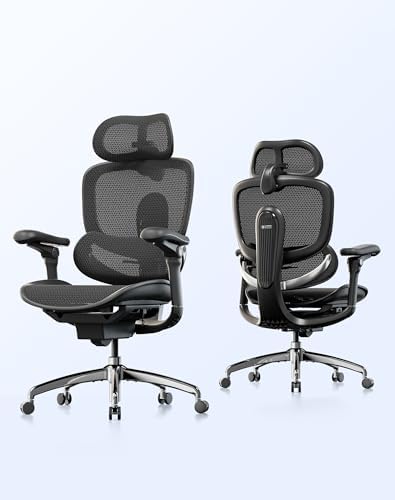


Yes — with a caveat. The Doro C300 lineup remains one of the best value-for-money ergonomic chair families on the market, especially if you spend six or more hours a day at a desk and don’t want to spend four figures on a Herman Miller or Steelcase. The catch is picking the right tier. The base C300 is a fantastic all-mesh chair for most body types, the C300 Pro adds seat depth adjustment and beefier armrests for taller or larger users, and the C300 Pro V2 is the newest, most refined version with a genuinely smarter lumbar and armrest system that fixes almost every complaint reviewers had about the original.
Below, I’ll break down each model individually, compare them side by side, and answer the questions people ask most before buying.
Who Makes SIHOO, and Can You Trust the Brand?
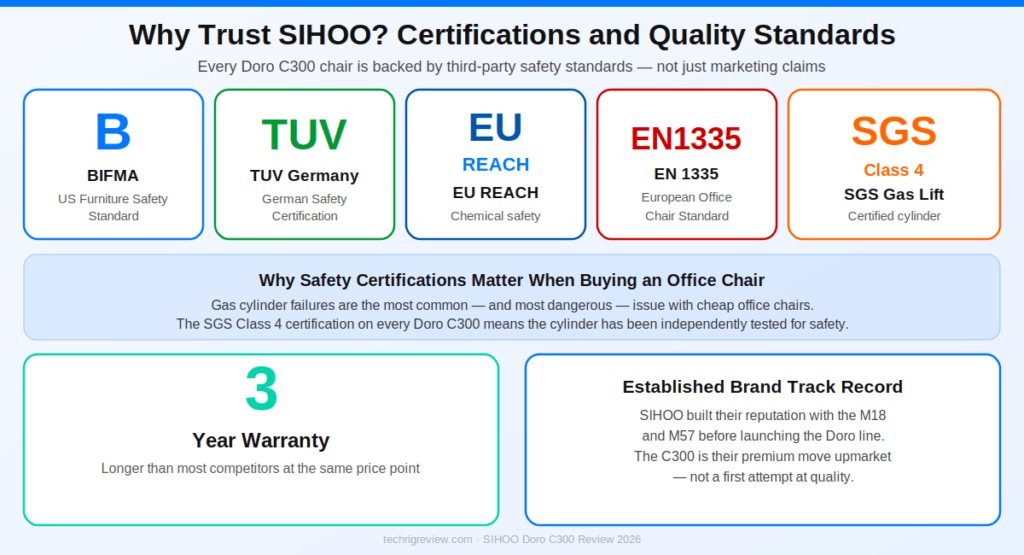
SIHOO isn’t a brand-new player throwing a chair on Amazon and hoping it sticks. The company has spent years building a reputation specifically in the budget-to-mid-range ergonomic chair space, with the SIHOO M18 and M57 both earning strong reputations among reviewers before the Doro line even existed. The Doro series represents SIHOO’s move upmarket — chairs designed to compete with $500–$1,000 ergonomic chairs while still undercutting them significantly on price.
On the credibility side, the Doro C300 chairs carry a genuinely solid list of third-party certifications: BIFMA compliance (the American furniture safety standard), German TÜV certification, EU REACH and EN1335 standards, and SGS-certified Class 4 gas lift cylinders. That matters because gas cylinder failures are one of the most common — and most dangerous — issues with cheap office chairs. SIHOO also backs every Doro C300 model with a three-year warranty, which is longer than what you’ll get from many similarly priced competitors.
SIHOO Doro C300 (Standard) — Full Review

The standard SIHOO Doro C300 is the entry point into this chair family, and it’s the one most people should start their research with.
Design and First Impressions
The first thing anyone notices about the Doro C300 is how different it looks from a typical mesh task chair. Instead of the armrests bolting into the seat pan like almost every other office chair on the market, SIHOO attached them directly to the chair’s frame. That single design choice gives the C300 a striking, almost skeletal look from the back — futuristic to some eyes, “functional-not-pretty” to others. It’s a genuine head-turner either way, and it’s one of the more distinctive-looking chairs in this price bracket.
The seat itself uses what SIHOO calls a “waterfall-shaped” seat pan, curved at the front edge to reduce pressure behind the knees during long sitting sessions. It’s a detail borrowed from far more expensive ergonomic chairs, and reviewers have consistently noted it makes a real difference on days when you’re glued to your desk for six-plus hours.
Comfort and Ergonomics
This is where the standard C300 earns its reputation. The full mesh construction — seat, back, and headrest — keeps air moving, which is a big deal if you run warm or work in a room without great air conditioning. Reviewers testing the chair for a month or longer consistently describe it as comfortable enough for genuine all-day use, not just an hour or two before your back starts complaining.
The lumbar support is dynamic, meaning it isn’t fixed in one spot — it tracks your spine’s position as you shift and lean back in the chair. The trade-off with the base model is that this tracking is entirely automatic; there’s no manual dial to firm it up or soften it, which taller and shorter users have flagged as a limitation. If you’re outside the average height range, the lumbar support tends to land either too high or too low relative to your actual lower back.
The 3D armrests adjust up and down, forward and back, and side to side, and they move in sync with the backrest when you recline — a nice touch that keeps your arms supported instead of leaving them floating in space when you lean back to think.
Build Quality and Assembly
Assembly is the one part of ownership almost every reviewer complains about — expect to spend 45 minutes to an hour putting the chair together, including wrestling a few caster wheels into place. SIHOO includes the tools you need (two Allen wrenches, one with a handle) and a pair of white gloves to keep the frame smudge-free during setup, which is a small but appreciated touch.
Once assembled, the frame feels solid rather than hollow or cheap. The chassis is hard plastic, but your body never actually touches it thanks to the mesh design, so it doesn’t affect comfort.
Specs at a Glance
- Seat height range: approximately 19–22 inches
- Tilt/recline angles: 110°, 120°, 130°
- Backrest height adjustment: roughly 2.36 inches (4 positions)
- Weight capacity: up to 300–330 lbs depending on version
- Materials: breathable mesh seat, back, and headrest with a hard plastic frame
- Warranty: 3 years
Who Should Buy the Standard C300?
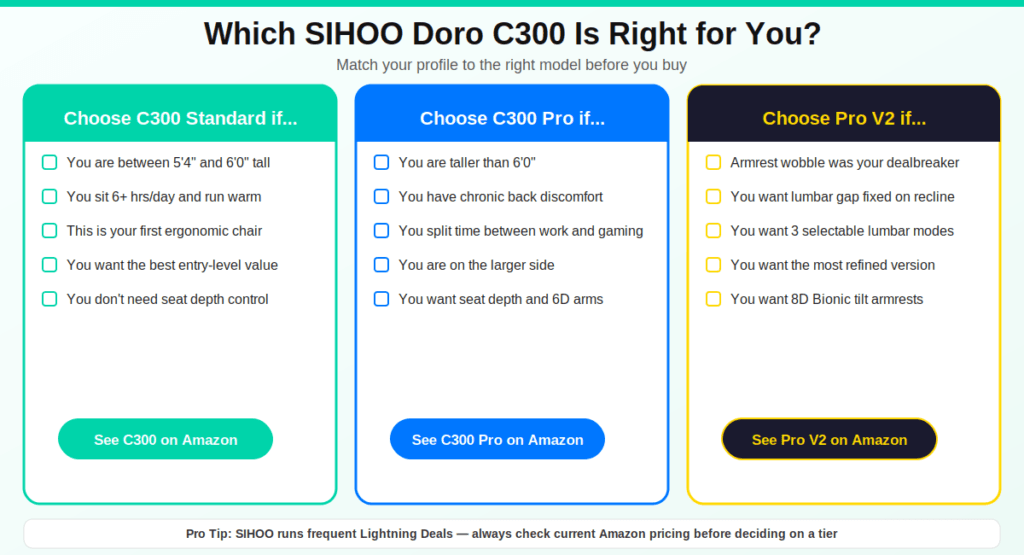
If your height falls within the average range (roughly 5’4″ to 6’0″) and you want a comfortable, good-looking, well-ventilated mesh chair without paying for seat depth adjustment or upgraded armrests, the standard Doro C300 is very hard to beat for the money. It’s the best starting point for most shoppers researching this lineup.
SIHOO Doro C300 Pro — Full Review
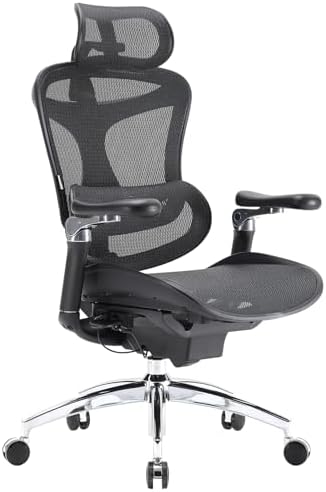
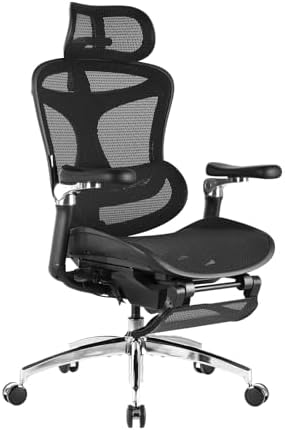
The SIHOO Doro C300 Pro takes everything from the standard model and adds the two features power users ask for most: seat depth adjustment and more sophisticated armrests.
What’s Different From the Standard C300
The headline upgrade is seat depth adjustment, which lets you slide the seat pan forward or back to match your leg length. This sounds minor, but it’s genuinely important — the standard C300’s fixed seat depth is one of the few complaints reviewers had, particularly for taller users who found the seat pan too short to properly support their thighs. The Pro fixes this outright, and testers over 6’2″ specifically called out how much it improved long-session comfort by better distributing weight across the full length of the thigh instead of concentrating pressure near the knees.
The armrests jump from 3D to 6D adjustability, adding rotation and depth control on top of the standard height, width, and forward/back movement. In practice, this means you can dial in armrest position for almost any typing, gaming, or mousing posture. The trade-off, according to multiple independent reviews, is that the added flexibility can make the armrests feel a little too loose — they can shift if you lean on them heavily to stand up or reposition yourself, and several reviewers wished for a locking mechanism. SIHOO has reportedly tightened this up in later production runs, but it’s still worth being aware of before you buy.
Comfort and Long-Term Testing
One of the more compelling accounts of the C300 Pro comes from a reviewer whose wife lives with Ankylosing spondylitis, a chronic inflammatory spine condition. After switching to the C300 Pro, she reported her nerve pain dropping from a self-rated 7–9 down to a 3–5 on a typical day — a meaningful, real-world data point for anyone specifically chair-shopping because of back pain rather than just general comfort. That’s obviously anecdotal and not a substitute for medical advice, but it does line up with the broader theme across reviews: the C300 Pro’s “cradling” recline and adaptive lumbar system genuinely help people who sit through pain, not just people who sit through boredom.
Assembly takes a bit longer here than the standard model — plan for closer to an hour — and the fully assembled chair is noticeably heavier at around 55 lbs, which actually works in its favor from a stability standpoint. It doesn’t feel like it’ll tip or wobble under a larger frame.
Specs at a Glance
- Seat depth: roughly 16.8–17.8 inches, adjustable
- Seat width: approximately 20.3 inches
- Seat height range: roughly 18.1–22.3 inches
- Weight capacity: up to 300–330 lbs
- Armrests: 6D adjustable, synced with recline
- Recline angles: 105°, 120°, 135°
- Warranty: 3 years
Who Should Buy the C300 Pro?
If you’re taller than average, on the larger side, or you deal with chronic back discomfort and want the most adjustability possible without jumping to the Pro V2’s price point, the C300 Pro is the sweet spot in this lineup. It’s also the better pick if you split your time between focused work and gaming, since the recline range and armrest flexibility suit both use cases well.
SIHOO Doro C300 Pro V2 — Full Review
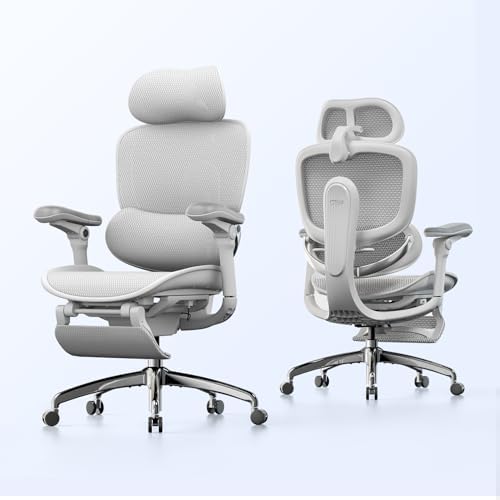

The SIHOO Doro C300 Pro V2 is the newest chair in the family, and it was built specifically to answer the complaints that followed the original C300 Pro through review after review — loose armrests, a lumbar gap when reclining, and a headrest mechanism that clicked loudly during use.
What’s New and Why It Matters
The biggest engineering story here is what SIHOO calls the Self-Adaptive Dynamic Lumbar Support 2.0. On the original C300 and C300 Pro, reclining deep in the chair could create a small gap between your lower back and the lumbar pad — your body moves, but the support stays put. On the Pro V2, the lumbar pad physically slides downward as you recline to track your body’s center of gravity, closing that gap. It also adds three selectable support modes: a firmer setting for aggressive lower-back pressure, a gentler setting for lighter support, and a sacrum-support mode that extends coverage below the typical lumbar zone. That’s a meaningful upgrade from the original’s fully automatic, zero-manual-control lumbar system.
The armrests have been completely redesigned into what SIHOO calls the “8D Bionic” system. On top of the usual height, width, and depth adjustments, they can now tilt upward — genuinely useful if you prop up a phone or tablet — and slide much further in and out. More importantly, the stability issue that plagued the original Pro’s armrests has reportedly been resolved; leaning on them to stand up or shift position is no longer the minor hazard it used to be.
SIHOO also branded the overall coordination system “DynaCore,” which synchronizes the head, back, lumbar, and armrest zones so that when you shift posture — leaning forward to type, then reclining to think — everything adjusts together instead of leaving one zone out of sync.
Build Quality
The Pro V2 is the heaviest chair in the lineup at roughly 57 lbs, and testers note that the mesh backrest ships pre-tensioned on the frame specifically to avoid the “shipping sag” that affects cheaper mesh chairs after their first few weeks of use. It also carries a full BIFMA certification across the whole chair assembly, not just individual components, which is a stronger quality signal than what most chairs in this price range offer.
Specs at a Glance
- Weight (assembled): approximately 57.3 lbs
- Seat depth adjustment: approximately 4 cm
- Recline angles: 105°, 125°, 135°
- Lumbar support: 3 selectable modes (firm, gentle, sacrum)
- Armrests: 8D Bionic adjustable armrests
- Certification: Whole-chair BIFMA certification
- Warranty: 3 years
Who Should Buy the C300 Pro V2?
If you’ve read complaints about earlier SIHOO chairs — wobbly armrests, a lumbar gap on recline, a clicky headrest — and those complaints were the only thing holding you back, the Pro V2 exists specifically to solve them. It’s the best chair in the lineup for anyone who wants the most refined, “figured it all out” version of the Doro C300 experience and is willing to pay a bit more for it.
What Reviewers Consistently Praise Across the Lineup
- Breathability. All three chairs use full mesh construction across the seat, back, and headrest, which reviewers repeatedly single out as a genuine advantage over PU leather chairs, especially for anyone who runs warm or works in a poorly ventilated room.
- Value relative to price. Every single review referenced in researching this piece makes some version of the same point: at full retail price these chairs are good, but during SIHOO’s frequent sales and Amazon promotions, they become genuinely excellent value against $500–$1,000 competitors like the Herman Miller Aeron or Steelcase Series lineup.
- Adaptive lumbar support. Across all three tiers, the dynamic lumbar system that tracks your spine as you move is consistently called out as the standout ergonomic feature, particularly for people managing back discomfort.
- Recline comfort. The multi-angle recline system, paired with armrests that move with the backrest, lets you shift from focused upright typing to a relaxed recline without losing support — something a lot of budget chairs get wrong.
What to Watch Out For
No chair is perfect, and it wouldn’t be an honest review if I skipped the downsides.
- Assembly takes real time. Budget 45 minutes to over an hour, and expect a few stubborn parts, particularly the caster wheels.
- Aesthetics are polarizing. The frame-mounted armrest design is distinctive, but more than one reviewer has bluntly called the chair “ugly” — you’ll want to look at photos and decide for yourself rather than assuming it’ll match your workspace aesthetic.
- Armrest stability on the original Pro. If you’re specifically eyeing the C300 Pro (not the V2), know that early units had armrests that could shift under lateral pressure. This is largely resolved on the Pro V2.
- Fixed lumbar height on the base model. If you’re notably shorter or taller than average, the standard C300’s non-adjustable lumbar position may not land perfectly on your lower back — this is one of the main reasons to step up to the Pro or Pro V2.
- It’s a heavy box. These chairs ship in dense, well-packed boxes weighing 50–60+ lbs. Make sure you have a clear path and, ideally, a second pair of hands for the unboxing.
SIHOO Doro C300 vs. the Competition
It’s worth putting these chairs in context against other options in the same rough price bracket. Chairs like the Branch Ergonomic Chair Pro and Branch Verve are frequently mentioned by reviewers as better-looking alternatives, but they typically cost more and don’t match the sheer adjustability of the Doro C300 Pro or Pro V2. On the other end, budget mesh chairs in the $150–$250 range generally can’t match SIHOO’s dynamic lumbar tracking or synchronized armrest movement — those features are usually reserved for chairs costing two to three times as much elsewhere. That positioning — genuinely high-end ergonomic features at a mid-range price — is the entire reason the Doro C300 lineup has built such a strong reputation on Amazon.
Frequently Asked Questions
Is the SIHOO Doro C300 good for back pain?
Multiple long-term reviewers and users specifically bought Doro C300 chairs to address back pain and reported real improvement, particularly with the Pro and Pro V2 models thanks to their adaptive lumbar systems. That said, no chair is a substitute for medical advice — if you have a diagnosed spine condition, it’s worth checking with a physical therapist or doctor about what support level is right for you.
How long does the SIHOO Doro C300 take to assemble?
Most reviewers report 45 minutes to just over an hour, depending on the model. The Pro and Pro V2 tend to take slightly longer due to the additional components.
What’s the difference between the SIHOO Doro C300 and C300 Pro?
The Pro adds seat depth adjustment and upgrades the armrests from 3D to 6D adjustability, making it better suited to taller users and anyone who wants more fine-tuned support.
Is the SIHOO Doro C300 Pro V2 worth the upgrade over the original Pro?
If armrest stability and lumbar gap during recline were ever concerns for you, yes — the Pro V2 was built specifically to resolve those two issues, plus it adds selectable lumbar support modes the original doesn’t have.
Does the SIHOO Doro C300 work for tall or plus-size users?
The standard C300 fits most average-height users comfortably. If you’re above roughly 6’0″ or on the larger side, the Pro or Pro V2 — both of which offer seat depth adjustment and a higher weight capacity — are the better fit.
Where’s the best place to buy a SIHOO Doro C300 chair?
Amazon is generally the easiest and most reliable option thanks to fast shipping, easy returns, and frequent lightning deals. Since SIHOO runs promotions regularly, it’s always worth checking the current price on Amazon before buying rather than assuming list price is what you’ll pay.
Final Verdict
The SIHOO Doro C300 lineup earns its reputation. It’s not a flawless chair family — assembly is a chore, the look won’t be for everyone, and the base model’s fixed lumbar position isn’t ideal for every body type — but as a complete package, it delivers ergonomic features you’d normally expect to pay $600–$1,000 for at a fraction of the price, backed by real safety certifications and a genuinely useful three-year warranty.
- Pick the standard Doro C300 if you’re of average height and want the best entry point into serious ergonomic seating.
- Pick the Doro C300 Pro if you’re taller, larger, or dealing with back discomfort and want maximum adjustability.
- Pick the Doro C300 Pro V2 if you want the most refined version available, with the armrest and lumbar issues of earlier models resolved.
Whichever tier fits your needs, the smartest move is to compare current pricing directly on Amazon, since SIHOO’s frequent promotions can make a higher tier suddenly cost the same as the one below it.
This review is based on aggregated hands-on testing reports, long-term ownership feedback, and manufacturer specifications available as of 2026. As an Amazon Associate, we may earn from qualifying purchases made through the links above at no extra cost to you.

MD.HASAN is an experienced SEO expert and amazon products review writer passionate about helping people find right products on amzon for buy without confusion. With 4 years of hands-on experience in content strategy and search engine optimization, he specializes in writing SEO-friendly blog posts that rank, engage, and convert.