🔗 Affiliate Disclosure: As an Amazon Associate, Tech Rig Review earns from qualifying purchases. Links on this page may be affiliate links — at no extra cost to you.
Learn how to choose a desk lamp that won’t strain your eyes. Key features, real Amazon recommendations, and simple tips for comfortable long hours at your desk.
Long hours at a desk often end with tired, dry, or aching eyes. Poor lighting is one of the biggest causes. Harsh glare, flickering LEDs, wrong color temperature, or uneven brightness force your eyes to work harder than they should.
This guide shows you exactly how to choose a desk lamp that reduces eye strain. We focus on the features that matter most according to lighting standards and patterns in verified buyer feedback. You will also find real, currently available Amazon products that deliver soft, adjustable, flicker-free light.
Good lighting pairs well with proper monitor height. If you have not adjusted your screen yet, check our guide to the best Amazon monitor stands for better posture and less overall fatigue.
Table of Contents
Why Regular Desk Lamps Cause Eye Strain
Many cheap lamps create problems in three ways:
- Flicker (even if you cannot see it)
- Harsh glare or bright spots
- Color temperature that is too cool or too warm for the task
Your eyes constantly adjust to these issues. Over time this leads to fatigue, headaches, and reduced focus. The right lamp solves these problems with diffused light, wide brightness control, and adjustable color temperature.
Key Features of an Eye-Friendly Desk Lamp
Look for these qualities when shopping:
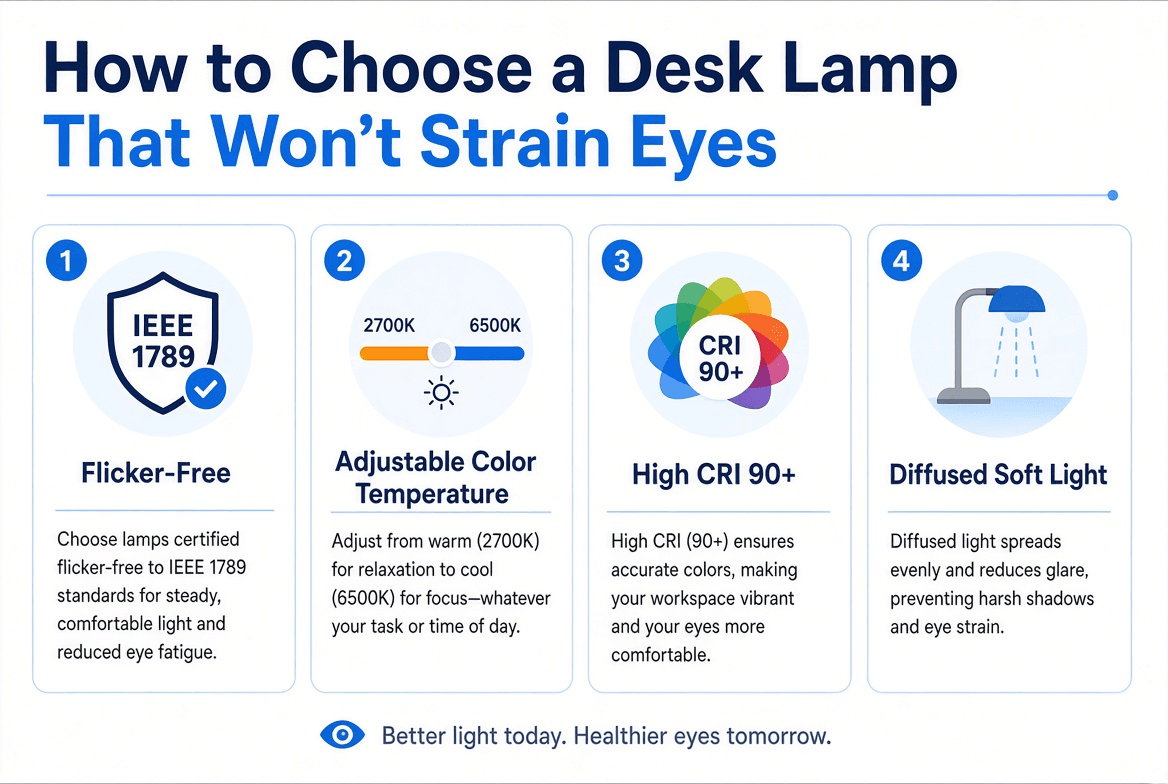
Flicker-free design
Lamps that meet IEEE 1789 standards or carry TÜV Rheinland flicker-free certification are safest.
Adjustable brightness
Stepless or many levels (at least 5–10) let you match the light to the room and task.
Adjustable color temperature
A range of roughly 2700K (warm) to 6500K (cool daylight) is ideal. Use warmer light in the evening and neutral-to-cool light for detailed work.
High CRI (Color Rendering Index)
CRI 90 or higher shows colors more accurately and feels more natural.
Diffused or asymmetric light
A frosted panel or special optical design spreads light evenly and reduces glare on screens and paper.
Flexible positioning
Gooseneck, swing arm, or clamp designs let you aim the light where you need it without shining into your eyes.
Recommended Amazon Desk Lamps That Reduce Eye Strain
Only currently available products with verified ASINs are listed. Always check the live page for the latest details.
BenQ e-Reading Desk Lamp
This is one of the most frequently recommended lamps for eye comfort. It features ultrawide illumination, dual smart modes (Screen and Paper), auto-dimming based on ambient light, high CRI (over 95), IEEE 1789 flicker-free certification, and RG0 blue-light rating. Buyers consistently praise the even light spread and reduced glare during long sessions.
Link: BenQ e-Reading Desk Lamp
Airlonv LED Clamp Desk Lamp
A popular clamp-style option with stepless dimming, full color-temperature range (2700K–6500K), and a wide light bar. It is designed for dual-monitor desks and receives strong feedback for soft, even illumination and easy positioning.
Search current Airlonv eye-caring clamp lamps on Amazon for the latest available ASIN that matches your desk thickness.
LEPOWER and Similar Adjustable LED Desk Lamps
Budget-friendly metal gooseneck and architect-style lamps with multiple brightness levels and color modes appear regularly in buyer feedback for everyday eye comfort. Many offer solid diffusion and flexible arms at accessible prices. Check current LEPOWER eye-caring desk lamp listings for verified stock.
For a wider selection of affordable options, see our full roundup of the best Amazon desk lamps.
How to Set Up Your Desk Lamp for Maximum Comfort
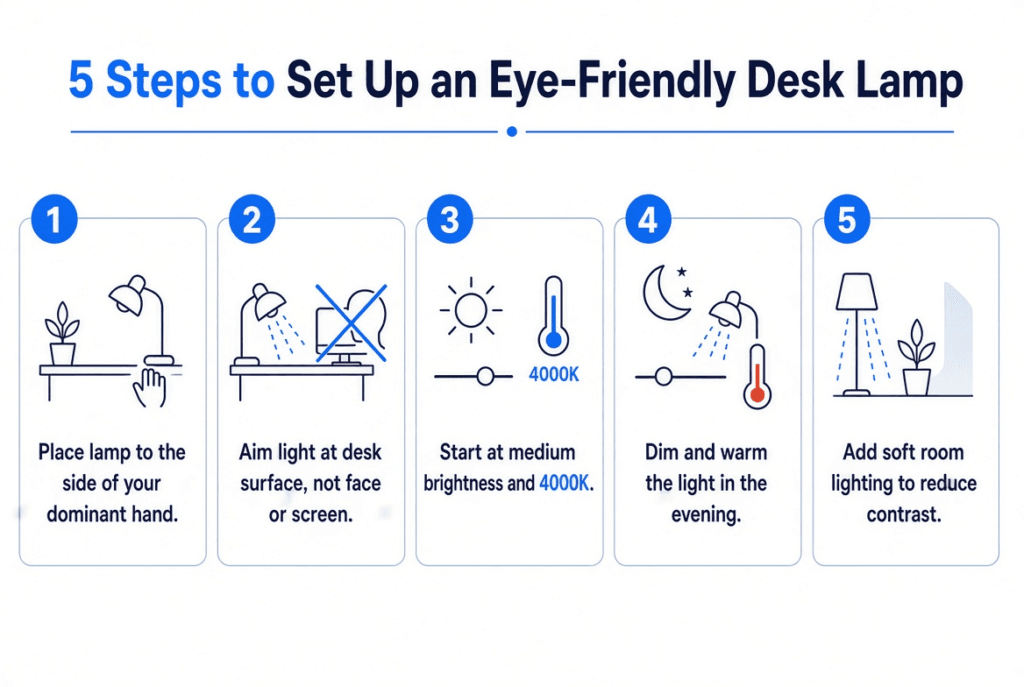
- Place the lamp to the side opposite your dominant hand so it does not cast shadows while writing.
- Aim the light at the desk surface, not directly at your face or screen.
- Start with medium brightness and neutral color temperature (around 4000K).
- Lower brightness and shift toward warmer light in the evening.
- Combine with ambient room lighting so the contrast between the desk and the rest of the room is not extreme.
Buyer’s Guide: Matching the Lamp to Your Needs
For dual-monitor setups — Choose a wide light bar or clamp lamp that covers both screens without creating hotspots.
For reading and paper work — Prioritize high brightness and Paper mode if available.
For late-night work — Favor lamps with strong warm-light options and good dimming so you do not disrupt sleep.
Budget vs premium — Entry-level lamps with basic dimming and color options work well for most people. Premium models add auto-dimming, higher CRI, and certified flicker-free performance.
External resources for deeper reading include the American Optometric Association guidance on workplace lighting, IEEE standards on LED flicker, and manufacturer technical pages on CRI and blue-light ratings.
FAQ
What color temperature is best for reducing eye strain?
Neutral light around 4000K works well for most daytime tasks. Switch to warmer light (2700K–3500K) in the evening.
Is flicker really a problem if I cannot see it?
Yes. Invisible flicker can still cause fatigue and headaches over long periods. Look for certified flicker-free lamps.
Do I need a special “eye-care” lamp or will any LED work?
Many regular LEDs are fine if they offer good diffusion, dimming, and color control. Certified models give extra peace of mind.
Should the lamp be brighter than my monitor?
The desk surface should be well lit, but avoid strong contrast with the screen. Aim for comfortable, even illumination.
Can a clamp lamp work on a standing desk?
Yes, as long as the clamp fits the desk thickness and the arm reaches properly.
How important is CRI?
Higher CRI (90+) makes colors look more natural and is especially helpful for design, photo editing, or detailed crafts.
Where should I position the lamp relative to my monitor?
Slightly to the side and behind the front edge of the desk so light falls on the keyboard and papers without reflecting on the screen.
Conclusion
Choosing a desk lamp that will not strain your eyes comes down to a few clear features: flicker-free light, adjustable brightness and color temperature, good diffusion, and flexible positioning. The BenQ e-Reading Desk Lamp stands out for its wide coverage and certified eye-care design. Clamp and gooseneck options from Airlonv and LEPOWER deliver strong everyday performance at lower prices.
Set the lamp correctly, match the light to the time of day, and combine it with proper monitor height. Your eyes will feel the difference after long work sessions.
As an Amazon Associate I earn from qualifying purchases.

MD.HASAN is an experienced SEO expert and amazon products review writer passionate about helping people find right products on amzon for buy without confusion. With 4 years of hands-on experience in content strategy and search engine optimization, he specializes in writing SEO-friendly blog posts that rank, engage, and convert.