🔗 Affiliate Disclosure: As an Amazon Associate, Tech Rig Review earns from qualifying purchases. Links on this page may be affiliate links — at no extra cost to you.
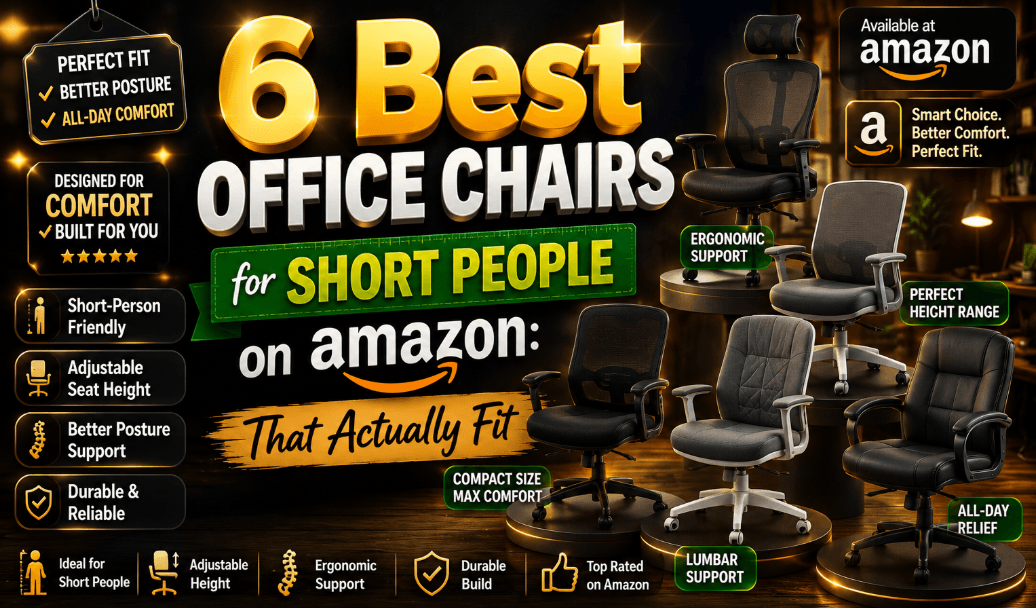
Discover the 6 best office chairs for short people on Amazon. Compare ergonomic features, comfort, and adjustability to find your perfect fit.
If you’re 5’4″ or under, you already know the drill. You sit down in a “standard” office chair, and your feet hover an inch above the floor. The lumbar pad presses into your shoulder blades instead of your lower back. The seat pan is so deep that the front edge digs into the back of your knees, so you either slouch forward or perch on the edge like you’re about to bolt out of the room. By hour three, your hips ache. By hour six, you’re standing up every twenty minutes just to feel normal again.
This isn’t a “you” problem. Most office chairs are engineered around a 5’9″–5’10” frame, because that’s roughly the average adult height used in ergonomic design standards. If your body doesn’t match that number, the chair simply doesn’t fit — no matter how many awards it’s won or how expensive it is.
The good news: a genuinely well-fitting chair exists for almost every short or petite frame, and you don’t have to guess your way there. I spent weeks digging through manufacturer spec sheets, verified Amazon listings, and real owner reviews from people who are actually 4’9″ to 5’4″, looking specifically at the four measurements that matter most for a smaller body: seat height, seat depth, lumbar position, and armrest range. Below are the six chairs that came out on top, along with who each one is actually built for, and who should skip it.
Table of Contents
Why “Ergonomic” Isn’t the Same as “Fits Short People”
A lot of chairs marketed as “ergonomic” are ergonomic for an average-height adult — not for you. Before you buy anything, it helps to understand the four adjustments that actually decide whether a chair works for a smaller frame.
1. Minimum Seat Height
This is the single most important number on the spec sheet. If the lowest setting still leaves your feet dangling, your thighs carry your body weight instead of your sit bones, which cuts off circulation and creates pressure behind the knees. Look for a minimum seat height of 15.5 inches or lower if you’re under 5’3″. Most “standard” office chairs bottom out around 17–18 inches, which is already too tall for a lot of petite users.
2. Adjustable Seat Depth
Seat depth is the distance from the front edge of the seat to the backrest. If it’s too long for your thighs, you either can’t reach the backrest (so you lose lumbar support entirely) or the front lip presses into the back of your knees. You want a chair where the seat pan slides, or where the depth is proportioned for a shorter thigh length to begin with — ideally with two to three finger-widths of clearance behind your knee when you sit fully back.
3. Vertically Adjustable Lumbar Support
Shorter torsos need the lumbar curve to sit lower on the backrest than it does for an average-height user. A fixed lumbar pad that can’t move up and down will often land in the middle of your back instead of your lower spine, which does more harm than good.
4. Armrest Height and Width
If the armrests can’t come down low enough, they’ll push your shoulders up toward your ears, which causes neck and shoulder tension over a full workday. Narrower armrest spacing also matters for smaller shoulder widths, which is why some brands specifically design “petite” armrest sets.
Keep these four in mind as you read the reviews below — they’re the reason some very popular, highly rated chairs still didn’t make this list.
Quick Comparison Table
| Chair | Best For | Min. Seat Height | Seat Depth Adjustable? | Footrest Included? |
|---|---|---|---|---|
| SIDIZ T50 | Best Overall | ~15″ | Yes (18″–21″) | No |
| CabeVibe CabLady S2 | Best for Very Petite Frames | Low, purpose-built | Yes | Yes (built-in) |
| Herman Miller Aeron – Size A | Best Splurge / Long-Term Investment | Sized for 4’8″–5’9″ | Fixed, proportioned for size A | No |
| Alera Etros Petite Mid-Back Mesh | Best Budget Pick | ~17.16″ | No (seat glide only) | No |
| FLEXISPOT ErgoX with Footrest | Best Built-In Footrest | Standard, footrest closes the gap | Yes | Yes (built-in) |
| Duramont Ergonomic Office Chair | Best Lumbar Support Under 5’4″ | Runs a little tall | No | No |
Prices, colorways, and stock change constantly on Amazon, so click through to confirm current availability and price before buying.
1. SIDIZ T50 — Best Overall Office Chair for Short People

- [Million Seller for a Reason] Trusted by multinational companies in 62 countries, T50 desk chair sold 2M units worldwide…
- [Dive into Innovative Ergonomics] T50’s S-curve design optimally synchronizes and supports your spine. Its modern look e…
- [Experience Advanced Adjustability] T50 home office chair offers 10+ adjustable functions, supporting your every posture…
If you only read one section of this guide, make it this one. The SIDIZ T50 is the chair that keeps showing up in petite-focused reviews for a simple reason: its seat height drops low enough that testers around 5’4″ can plant both feet flat on the floor without a footrest, and it doesn’t sacrifice adjustability to get there.
What makes it work for short people: The seat height goes down to roughly 15 inches from the floor, which is dramatically lower than most task chairs in its price range. Combine that with a genuinely useful seat depth adjustment (about 18″–21″), and you can dial in thigh support without the front edge cutting into the back of your knees. The lumbar support also moves both up and down and in and out, so it’s one of the few sub-$600 chairs that can actually reach a shorter torso’s natural curve instead of sitting a few inches too high.
One of its more unusual features is a forward seat tilt lever, which tips the entire seat pan forward a few degrees. It sounds minor, but it opens up the angle at your hips and takes pressure off your lower back and neck — something petite reviewers specifically call out as noticeably comfortable.
Where it falls short: The base model doesn’t come with a headrest (you can buy one separately), and the seat padding is on the firmer side, which some reviewers wanted more cushion in. It’s also GREENGUARD-certified but built mostly from plastic, so it looks more premium than it feels in terms of material weight.
Who it’s for: Anyone between about 4’9″ and 5’8″ who wants one chair that handles seat height, seat depth, and lumbar positioning without needing an aftermarket footrest.
Who should skip it: If you’re consistently above 5’9″, the max height setting will feel restrictive — look at the Aeron or a taller-range chair instead.
2. CabeVibe CabLady S2 — Best for Very Petite Frames (4’9″–5’11”)


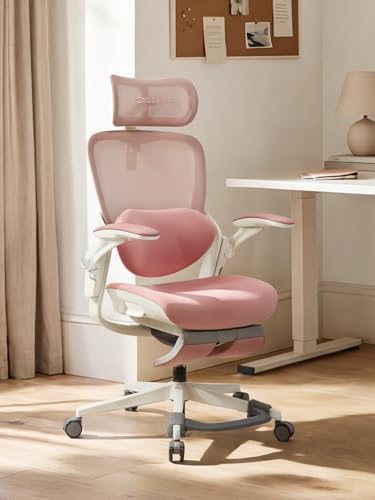
Most “petite” office chairs are just standard chairs with the seat height nudged down an inch or two. The CabLady S2 takes a different approach: it was built from a shorter seat pan, narrower armrest spacing, and a lower-positioned lumbar curve from the ground up, specifically for smaller frames.
What makes it work for short people: Three things stand out here. First, the lumbar support sits lower on the backrest by default, which matches where a shorter torso’s natural curve actually is instead of forcing you to max out the adjustment range just to get close. Second, it includes a built-in footrest and foot pedal, so even on days when the seat is set slightly higher than ideal for your desk, your legs still have support instead of dangling. Third, the seat depth adjusts by roughly 2.4 inches, which is specifically tuned for shorter thighs rather than a generic “one size shrinks all” range.
The armrests are also narrower-set than most unisex office chairs, and they flip up 90 degrees, which is genuinely useful if you’re working in a tight home-office corner or want to slide the chair fully under a desk.
Where it falls short: This is a newer entrant to the market compared to legacy brands like Alera or Herman Miller, so the long-term durability track record is shorter. It’s also priced more like a mid-range ergonomic chair than a budget pick, so if cost is your main constraint, it’s not the first place to look.
Who it’s for: Petite users (roughly 4’9″–5’5″) who have struggled specifically with lumbar support sitting “too high” on standard chairs, and who want a footrest built in rather than purchased separately.
Who should skip it: If you’re on a tight budget, the Alera Etros below gets you most of the petite-specific benefit for less.
3. Herman Miller Aeron — Size A — Best Splurge for Long-Term Comfort

- Recycled Material
- Your purchase includes One Herman Miller Aeron Ergonomic Chair – Size A, graphite color
- Chair dimensions: 38.5″ H x 25.75″ W x 16″ D. Seat heights: 14.75”-19”.
The Aeron is one of the only major ergonomic chair lines that ships in three genuinely different sizes rather than one frame with a wider adjustment range. Size A is purpose-built for people between about 4’8″ and 5’9″ and 90–160 lbs, with proportionally smaller seat width, depth, and backrest height than the B and C sizes.
What makes it work for short people: Because the whole chair — not just the seat height cylinder — is scaled down, the backrest actually reaches your shoulder blades instead of towering above your head, and the seat width doesn’t leave you swimming in extra space on either side. The PostureFit SL lumbar system targets the sacral region specifically, which is especially helpful for petite users whose lower back curve sits closer to the seat than an average-height user’s does. The 8Z Pellicle mesh is breathable and holds its shape for years rather than sagging the way foam cushions eventually do.
Where it falls short: The seat depth on the Aeron isn’t independently adjustable — you get the depth Herman Miller engineered for Size A, period. If your torso and legs are proportioned unusually even for your height, that fixed depth might not be perfect. The lumbar support is also on the firmer side; petite or lighter-framed users sometimes describe it as “technically correct” rather than plush. And realistically, this is the most expensive chair on this list by a wide margin, so budget matters here more than with any other pick.
Who it’s for: Short-framed professionals who sit 6+ hours a day and want a chair engineered to last well over a decade, backed by a 12-year warranty.
Who should skip it: If you want a softer, more cushioned feel, or you’re not ready to spend at this level, several other chairs on this list will get you 80% of the ergonomic benefit for a fraction of the investment.
4. Alera Etros Series Petite Mid-Back Mesh Chair — Best Budget Pick

- An economical choice for mesh comfort
- Designed for the petite user, but adjustable to fit all
- Three-lever multifunction mechanism for complete control of the back angle relative to seat, seat slide and forward tilt
Alera has been making office furniture for decades, mostly sold into corporate and government offices, which means the Etros Petite isn’t a trendy new brand — it’s a workhorse chair that happens to be one of the most affordable “designed for petite users” options you’ll find on Amazon.
What makes it work for short people: The chair is explicitly labeled as designed for the petite user, with a seat height range of roughly 17.16″ to 20.86″ and a mid-back mesh design that’s proportioned smaller than Alera’s standard Etros line. The lumbar support is height-adjustable, and the armrests move in both height and width — a detail that a lot of budget chairs skip entirely. The three-lever multifunction mechanism gives you independent control over back angle, seat slide, and forward tilt, which is more adjustability than you’d expect at this price point.
Where it falls short: There’s no true seat depth adjustment beyond the seat slide function, and the minimum seat height (about 17.16″) is higher than the SIDIZ T50 or CabLady S2, so if you’re under about 5’1″, you may still want to pair it with a low footrest. It’s also backed by ANSI/BIFMA testing rather than a long consumer warranty, so don’t expect the same after-sale support you’d get from a direct-to-consumer ergonomic brand.
Who it’s for: Budget-conscious shoppers roughly 5’1″–5’6″ who want a chair explicitly engineered for a smaller frame without paying premium-brand prices.
Who should skip it: Anyone under about 5’1″ who needs the seat height to go lower than 17 inches — look at the SIDIZ T50 instead.
5. FLEXISPOT ErgoX with Footrest — Best Built-In Footrest Solution
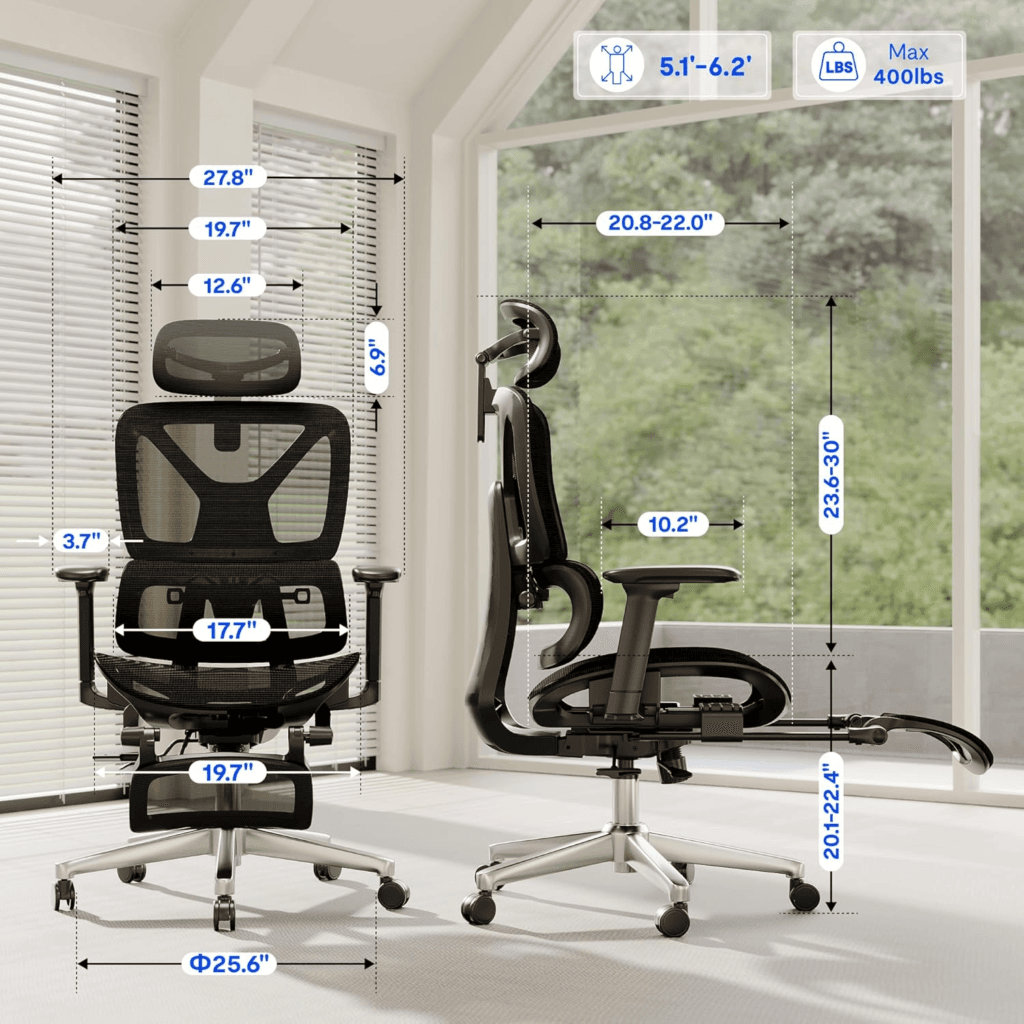
Sometimes the smartest fix for a short frame isn’t finding a chair with an impossibly low seat height — it’s finding a well-built ergonomic chair with a footrest already integrated into the design, so you’re not stacking a separate accessory under your desk.
What makes it work for short people: The ErgoX includes a pull-out footrest built into the base, which closes the gap for anyone whose feet still don’t quite reach the floor even at the lowest seat height setting. Beyond that, it has genuinely solid ergonomic fundamentals: dynamic lumbar support, 3D adjustable armrests, a mesh seat for breathability, and a recline-and-tilt mechanism that doesn’t feel like an afterthought. For people who split time between focused desk work and reclining to read or take a call, the footrest-plus-recline combination is hard to beat at this price.
Where it falls short: This is a “standard chair plus a footrest” solution rather than a chair engineered from scratch for petite proportions, so the seat depth and lumbar positioning aren’t as finely tuned to a shorter body as the CabLady S2 or SIDIZ T50. If your main issue is seat depth pressing behind your knees rather than dangling feet, this isn’t the strongest fix.
Who it’s for: Anyone whose primary complaint is “my feet don’t reach the floor” and who wants that solved without buying a separate footrest that clutters the floor space under the desk.
Who should skip it: If seat depth or lumbar height is your bigger issue, prioritize a chair built specifically for petite proportions instead.
6. Duramont Ergonomic Office Chair — Best Lumbar Reach for Under 5’4″
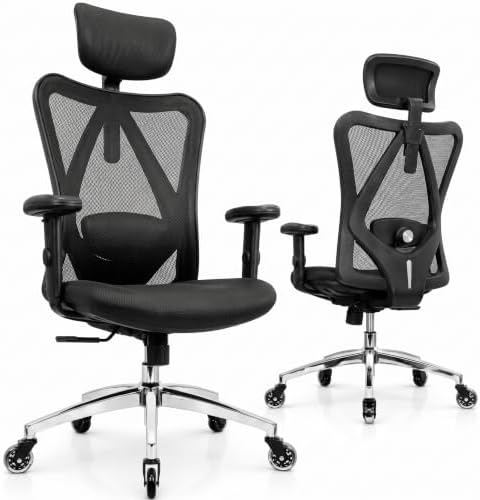
- FULLY ADJUSTABLE LUMBAR SUPPORT FOR OPTIMAL POSTURE – Suffering from back pain or want to prevent it? Our ergonomic desk…
- MORE ADJUSTABLE THAN ANY OTHER CHAIR IN ITS CLASS -Unlike competitor home office desk chairs that only allow you to full…
- BREATHABLE MESH & THICK MEMORY FOAM CUSHION FOR ALL-DAY COMFORT -The high-density breathable mesh back provides superior…
The Duramont is one of the most reviewed office chairs on Amazon, and it’s worth including here with an honest caveat: it’s a mixed bag for short users, but it earns its spot for one specific reason — the 4D lumbar support (moves up, down, in, and out) can reach low enough to genuinely support users around 5’4″ and under, which a lot of fixed-lumbar budget chairs simply can’t do.
What makes it work for short people: Beyond the lumbar reach, you get a height-adjustable headrest, adjustable tilt tension, multiple recline angles, and height-adjustable armrests, all at a price well below premium ergonomic brands. Owners who fit comfortably in the lower half of its size range consistently mention that the chair “finally” put their lumbar support where it needed to be, something they hadn’t found in cheaper mesh chairs.
Where it falls short — and this matters: Reviews are genuinely split on seat height. Some short owners find the chair sits noticeably taller than expected even at its lowest setting, which can leave feet dangling if you’re closer to 5’0″–5’2″. The seat depth is also fixed rather than adjustable. In short: this chair solves the lumbar-positioning problem well, but it doesn’t solve the seat-height problem as reliably as the SIDIZ T50 or CabLady S2. If you’re under 5’2″, plan to pair it with a footrest, or lean toward one of the two chairs above instead.
Who it’s for: Users roughly 5’2″–5’6″ whose main complaint is lumbar support hitting the wrong spot on their back, and who want strong adjustability without spending at premium-chair prices.
Who should skip it: Anyone under 5’2″ whose main issue is feet not reaching the floor — the seat height range isn’t the strongest part of this chair.
How to Measure Yourself Before You Buy
Specs on a product page only help if you know what to compare them against. Before you add anything to your cart, grab a tape measure and check these three numbers:
- Popliteal height (floor to the back of your knee while seated with thighs level): This should roughly match the chair’s minimum seat height. Most short users fall between 14 and 17 inches.
- Buttock-to-knee length (seat pan to back of knee): This tells you the seat depth you need. If a chair’s seat depth minus 2–3 inches is still longer than this measurement, your knees will feel the front edge.
- Torso length to your lower back curve: This helps you judge whether a chair’s lumbar adjustment range will actually reach your natural curve, or whether it’ll land too high no matter how far down you crank it.
Write these three numbers down and keep them next to you while comparing chairs — it turns “does this chair fit short people” from a guess into a measurement-based decision.
Setting Up Any Chair for a Shorter Frame
Even the best chair on this list won’t feel right if it’s set up wrong on day one. A few adjustments make a bigger difference than people expect:
- Set seat height first, before anything else. Feet flat on the floor (or fully supported on a footrest), knees at roughly a 90-degree angle.
- Adjust seat depth next. You want two to three finger-widths of space between the front edge of the seat and the back of your knees when sitting fully back against the backrest.
- Move the lumbar support until it sits in the small curve of your lower back, not your mid or upper back. This is usually a lower position than the “default” setting most chairs ship with.
- Lower the armrests until your shoulders relax down, not up toward your ears, with your elbows close to a 90-degree bend while typing.
- If your desk height doesn’t move, raise the chair to match the desk and add a footrest rather than lowering the desk relationship and losing wrist alignment.
Frequently Asked Questions
What counts as “short” for office chair sizing purposes?
Most ergonomic guides define petite or short as roughly 5’4″ and under, though the challenges — feet not reaching the floor, seat depth pressing behind the knees, lumbar support sitting too high — often start showing up for anyone under about 5’6″, depending on leg and torso proportions.
Do I really need a “petite” chair, or can a footrest fix everything?
A footrest solves the feet-dangling problem, but it doesn’t fix seat depth or lumbar positioning. If your only issue is your feet not reaching the floor, a quality footrest paired with almost any adjustable chair can work. If you also deal with knee pressure or lumbar support hitting the wrong spot, you’ll get better long-term results from a chair engineered with a shorter seat pan and lower lumbar range to begin with.
Is mesh or cushioned seating better for a petite frame?
Neither is universally better — it comes down to preference and climate. Mesh (like the SIDIZ T50 or Alera Etros) breathes better for warmer environments or hot sleepers. Cushioned foam seats can feel softer initially but may compress faster over time. What matters more for a shorter frame is that the seat depth and height are correctly proportioned, regardless of material.
Can a taller person’s ergonomic chair work for a short person if I just lower the seat?
Sometimes, but only if the minimum seat height goes low enough and the seat depth is either adjustable or naturally on the shorter side. A chair’s maximum-height capability tells you nothing about how well it will fit a smaller frame — always check the minimum seat height and seat depth range specifically.
How much should I expect to spend on a good short-person office chair?
Pricing varies quite a bit by brand and features, and Amazon’s listings change frequently, so the most reliable way to know current pricing is to check the product page directly on Amazon before you buy. In general, budget-friendly petite-specific chairs sit at the lower end of the ergonomic chair market, while premium multi-size chairs like the Aeron sit at the top.
Final Thoughts
The right office chair for a short or petite frame isn’t the one with the most levers or the biggest brand name — it’s the one where your feet touch the floor, your knees clear the seat edge, and your lumbar support actually lands on your lower back instead of somewhere near your shoulder blades. Start with your own measurements, match them against the seat height and seat depth ranges above, and you’ll cut through most of the guesswork before you ever click “add to cart.”
Of the six chairs above, the SIDIZ T50 is the strongest all-around pick for most short users thanks to its genuinely low seat height and full adjustability. If you’re on the more petite end of the spectrum and want a chair engineered specifically around that, the CabeVibe CabLady S2 is worth the look. And if budget is the deciding factor, the Alera Etros Petite gets you real petite-specific engineering without the premium price tag.
Whichever one you choose, check current pricing and availability directly on Amazon before purchasing, since options, colors, and pricing shift regularly.

MD.HASAN is an experienced SEO expert and amazon products review writer passionate about helping people find right products on amzon for buy without confusion. With 4 years of hands-on experience in content strategy and search engine optimization, he specializes in writing SEO-friendly blog posts that rank, engage, and convert.