🔗 Affiliate Disclosure: As an Amazon Associate, Tech Rig Review earns from qualifying purchases. Links on this page may be affiliate links — at no extra cost to you.
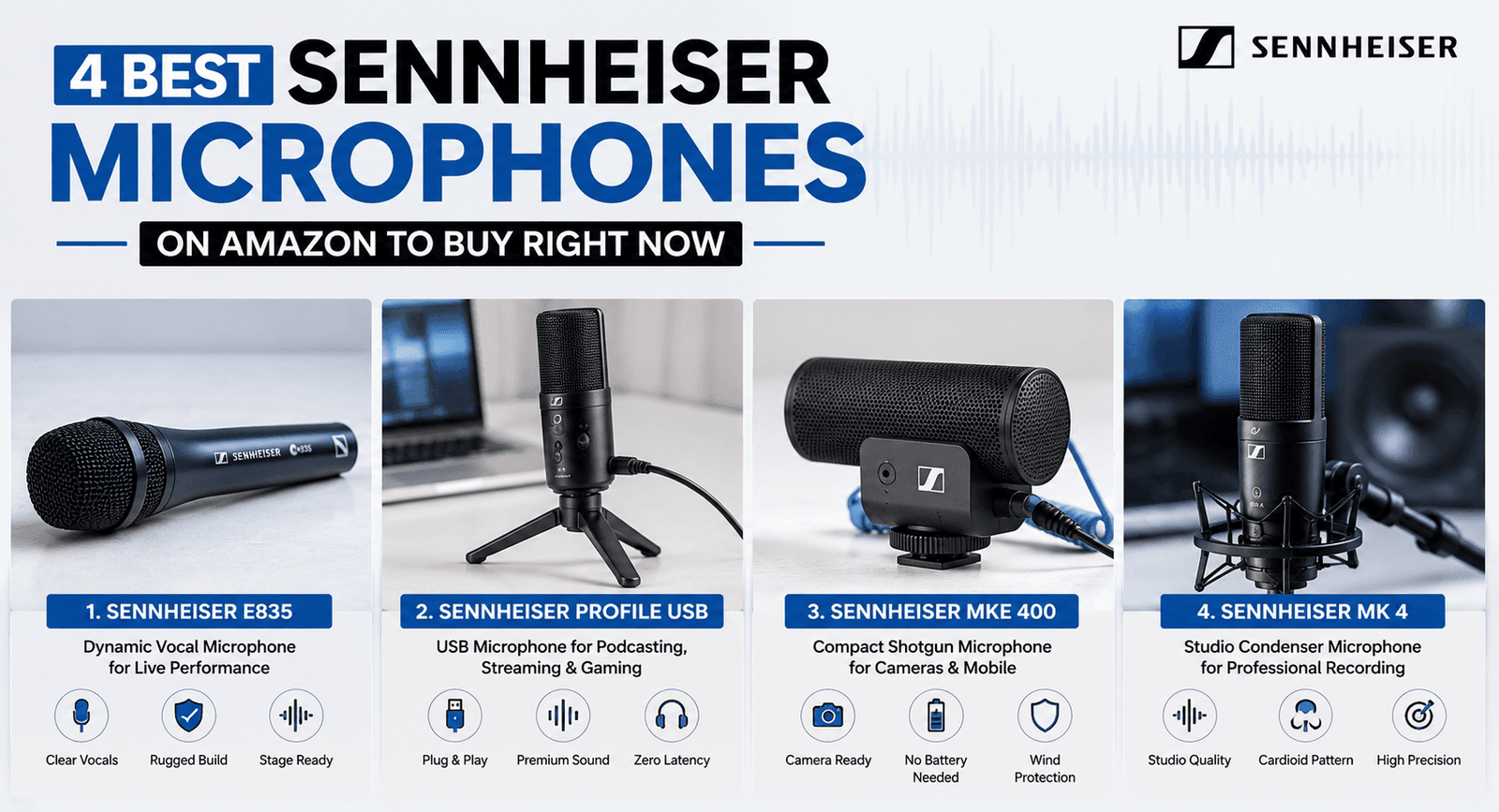
Looking for the best Sennheiser microphone on Amazon? Compare four researched Sennheiser mics for podcasting, vocals, streaming, and video.
Quick Answer
If you want the best Sennheiser microphone on Amazon, the right choice depends on what you record.
The Sennheiser Profile USB Microphone is the easiest choice for podcasting, streaming, voiceovers, online meetings, and home recording because it connects over USB-C and includes controls for gain, mix, headphone volume, and mute. Sennheiser describes it as a plug-and-play cardioid condenser microphone for podcasting, streaming, voiceover work, and video calls.
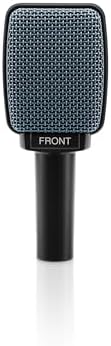
For vocals and live sound, the Sennheiser e 835 is a better fit. It’s a dynamic cardioid microphone built for speech and vocals, designed to keep the voice clear even when the performer moves around the microphone.
The e 835-S is similar but adds a silent on/off switch, which can be useful for live performers and speakers.
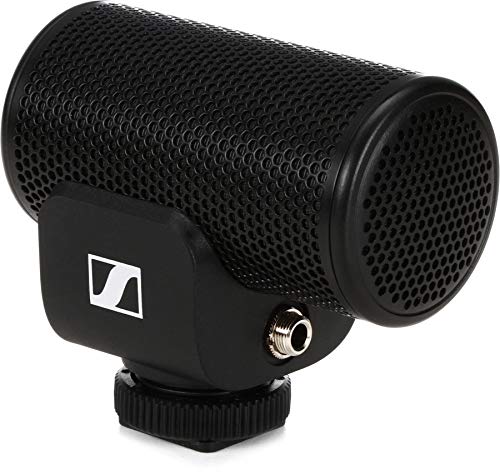
For cameras and mobile video, the Sennheiser MKE 400 makes more sense. It’s a compact, highly directional shotgun microphone designed for vlogging, mobile content, and on-the-go interviews.
This guide is based on product research, manufacturer specifications, Amazon listing information, and publicly available buyer-feedback patterns. I did not personally purchase or hands-on test these microphones, so I do not present laboratory or personal testing results as facts.
Table of Contents



Quick Comparison Table
| Microphone | Best For | Key Feature | Buyer Sentiment | Link |
|---|---|---|---|---|
| Sennheiser Profile USB Microphone | Podcasting & streaming | USB-C, cardioid condenser, onboard controls | Generally well regarded for simple desktop recording | Check on Amazon → |
| Sennheiser e 835 | Vocals & live speech | Dynamic cardioid design | Commonly praised as a dependable vocal microphone | Check on Amazon → |
| Sennheiser e 835-S | Stage use | Dynamic cardioid + silent switch | Strong fit for performers who want physical mic control | Check on Amazon → |
| Sennheiser MKE 400 | Vlogging & cameras | Directional shotgun pickup | Well suited to creators who need focused on-camera audio | Check on Amazon → |
Important: Amazon availability, sellers, shipping, and prices can change. Check the live Amazon listing before publishing or purchasing.
1. Sennheiser Profile USB Microphone
Best for Podcasting and Streaming
If you want a Sennheiser microphone for a computer, podcast, livestream, voiceover, or video call, the Profile USB Microphone is the most straightforward option in this comparison.
The reason is simple: you don’t need to start with a separate audio interface. The microphone connects through USB-C and is designed as a plug-and-play desktop microphone. Sennheiser lists support for macOS, iPadOS, Windows, and Android — making it especially attractive to people who want better audio without building a complicated studio.
The Profile uses a cardioid condenser capsule. A cardioid pattern is designed to focus more on sound coming from the front while reducing pickup from other directions — which makes sense for a person sitting in front of the microphone for a podcast, stream, meeting, or voice recording.
Sennheiser also built several useful controls directly into the microphone: gain control, mix control, headphone volume, and a soft-touch mute button, along with a 3.5 mm headphone output for monitoring. That’s a big advantage for beginners — instead of reaching for software every time you want to change a basic setting, you can make important adjustments directly on the microphone.
Key Specs
- Brand: Sennheiser
- Model: Profile USB Microphone
- Article number: 700065
- Connection: USB-C
- Transducer: Pre-polarized condenser
- Pickup pattern: Cardioid
- Frequency range: 20 Hz–20 kHz
- Sampling rates: 44.1 kHz and 48 kHz
- Maximum SPL: 125 dB SPL at minimum gain
- Headphone output: 3.5 mm
- Controls: Gain, mix, headphone volume, mute
- Housing: Metal
- Included: Microphone, table stand, USB-C cable (1.2m)
Why It Stands Out
The Profile is different from the e 835 and e 835-S because it’s designed around USB desktop recording. The e 835 family uses XLR — excellent, but normally part of a different type of audio setup. The Profile is simpler: connect it to a compatible device, position it, adjust the controls, and start recording.
For someone making YouTube videos at a desk, running a podcast, recording tutorials, joining online meetings, or streaming games, that simplicity can be more useful than buying a microphone that requires extra hardware. Sennheiser also gives the Profile an adjustable tilt mechanism, letting you aim the microphone toward your mouth instead of leaving it locked in one position.
Pros
- USB-C connection makes setup simple
- Cardioid condenser capsule suits close voice recording
- Gain control is built into the microphone
- Dedicated headphone monitoring is useful
- Physical mute button is convenient
- Includes a table stand
- Metal housing gives it a more substantial design
- Works across several major operating systems
Cons
- USB is not the same workflow as an XLR studio microphone
- A desktop microphone needs sensible placement for the best result
- Condenser microphones can pick up more room sound than some dynamic microphones
- The included table stand may not be ideal for every desk setup
Buyer Sentiment: The Profile is generally well regarded as a simple desktop USB microphone, with buyer feedback commonly focusing on sound quality, ease of use, and the convenience of its built-in controls.
What Buyers Are Saying: Publicly available product information and buyer-feedback summaries point to the Profile’s simplicity as one of its main strengths — the kind of microphone that makes sense for someone who wants to connect a microphone and start recording without first learning an audio interface. Its desktop controls are another practical benefit, letting you monitor through headphones and adjust basic levels without depending entirely on recording software.
Who should buy it: Anyone starting a podcast, recording YouTube videos, streaming from a desk, recording voiceovers, making online courses, taking frequent video calls, or upgrading from a laptop’s built-in microphone. If you want the simplest Sennheiser microphone for a computer, this is the one to look at first.
2. Sennheiser e 835
Best for Vocals and Live Speech
The Sennheiser e 835 is a very different microphone from the Profile — it’s not primarily a desktop USB microphone. It’s a dynamic cardioid microphone designed for vocals and live sound. Sennheiser describes it as a lead and backup vocal stage microphone and highlights its ability to maintain consistent sound when the performer moves off-axis.
That makes the e 835 particularly interesting for singers, speakers, presenters, churches, live events, rehearsal spaces, and people who want a traditional XLR microphone.
Key Specs
- Brand: Sennheiser
- Model: e 835
- Article number: 004513
- Type: Dynamic microphone
- Pickup pattern: Cardioid
- Connection: Wired, 3-pin XLR
- Primary uses: Speech and vocals
- Design: Rugged stage microphone
Sennheiser specifically highlights the e 835’s cardioid pickup, vocal clarity, off-axis consistency, controlled proximity effect, and ability to handle high sound pressure levels.
Why a Dynamic Microphone Can Make Sense
One of the biggest mistakes new buyers make is assuming that a condenser microphone is automatically better than a dynamic microphone — that’s not how microphones work. Different microphone designs suit different environments. For a live stage, you may not want a microphone that captures every sound around the room; you want the microphone to focus on the person speaking or singing. That’s where a cardioid dynamic microphone can make a lot of sense.
The e 835 is designed to maintain a consistent sound even when the performer isn’t perfectly centered on the capsule. Sennheiser also says it has a gentle presence boost intended to support clarity and projection — useful for live vocals.
The XLR Difference
The e 835 uses a 3-pin XLR connection, so you should think about the rest of your audio system before buying it. If you’re recording into a computer, you may need an audio interface or another compatible device with an XLR input. That’s not a disadvantage of the microphone itself — it’s simply a different workflow, and can be a good choice if you want more control over your recording chain and expect to upgrade other audio equipment later.
Pros
- Dynamic design suits vocals and live speech
- Cardioid pickup helps focus on the performer
- XLR connection fits traditional audio systems
- Designed to handle high sound pressure levels
- Consistent pickup when moving off-axis
- Rugged design is appropriate for stage use
- Useful for both lead and backup vocal duties
Cons
- Requires an XLR-compatible setup
- Not a plug-and-play USB microphone
- You may need an audio interface for computer recording
- Less convenient for a casual desk setup
Buyer Sentiment: The e 835 has a long history as a vocal microphone, and public buyer-feedback patterns commonly emphasize reliability, vocal clarity, and its usefulness for live performance.
What Buyers Are Saying: The main appeal of the e 835 is not a huge list of modern software features — it’s the basic job it performs. It’s a traditional vocal microphone designed to be used by a person rather than left on a desk, making it a better choice for someone who values a dependable XLR microphone over USB convenience.
Who should buy it: Anyone who sings live, speaks at events, runs presentations, records vocals, uses an audio interface, already owns an XLR mixer, or needs a stage microphone. It’s not the microphone to choose if you simply want to plug a microphone into a laptop — for that job, the Profile is much more convenient. But if your goal is vocals or live speech, the e 835 makes much more sense.
3. Sennheiser e 835-S
Best for Stage Performers Who Want a Switch
The Sennheiser e 835-S is closely related to the e 835 — the two microphones share the same basic purpose. Both are dynamic cardioid microphones for speech and vocals. The major practical difference is the on/off switch.
Sennheiser lists the e 835-S as a dynamic cardioid microphone intended for home recording, semi-professional studios, and live sound, also designed for stage vocals and speech.
For some buyers, the switch is useful. For others, the standard e 835 may be the cleaner choice.
Key Specs
- Brand: Sennheiser
- Model: e 835-S
- Article number: 004514
- Type: Dynamic
- Pickup: Cardioid
- Connection: Wired, 3-pin XLR
- Use: Speech and vocals
- Switch: Silent on/off switch
- Housing: Rugged metal design
Sennheiser highlights the e 835-S’s ability to handle high sound pressure levels, reject feedback, reduce handling noise, and maintain sound quality when the singer moves away from the center of the microphone.
What Makes the e 835-S Different?
The most obvious distinction is the switch. Imagine you’re speaking at a small event and finish your part — instead of relying on the mixer or sound engineer to mute your channel, you can use the microphone’s switch. That can be convenient.
However, there’s a trade-off: a physical switch can also be accidentally moved if the microphone is handled roughly. For a controlled stage environment, this may not matter; for some professional setups, the operator may prefer microphones without switches so that muting stays under the control of the mixer. That’s why I would not automatically call the e 835-S better than the e 835 — it’s simply better for a particular workflow.
Why Cardioid Matters: The e 835-S uses a cardioid pattern, helping focus the microphone on the performer and assisting with feedback control in a live environment. Sennheiser also says the microphone has a uniform frequency pickup pattern and can maintain signal quality when the performer moves off-axis — useful because singers and speakers rarely stand perfectly still. A microphone that only sounds good when your mouth is exactly in one position can become frustrating on stage.
Pros
- Dynamic cardioid design
- Built for vocals and speech
- 3-pin XLR connection
- Physical silent on/off switch
- Good fit for live performances
- Designed to handle high sound pressure
- Feedback rejection is a stated design goal
- Rugged metal housing
Cons
- XLR connection means additional equipment may be needed
- Not designed as a simple USB computer microphone
- Switch may not suit every professional sound workflow
- Less convenient than the Profile for desktop recording
Buyer Sentiment: The e 835-S is generally viewed as a dependable traditional vocal microphone, with its switch being the key feature that separates it from the standard e 835.
What Buyers Are Saying: The strongest reason to choose the e 835-S is not that it completely changes the sound compared with the e 835 — it’s the workflow. If you like having a physical mute control on the microphone, the S model is the more convenient version. If you don’t need a switch, there’s little reason to choose it solely because it has the “S” designation.
Who should buy it: Singers, public speakers, event presenters, church services, rehearsal spaces, small live venues, home recording with an XLR interface, and users who specifically want a microphone mute switch.
If you’re deciding between the e 835 and e 835-S, ask one simple question: do I want a physical switch on the microphone? If yes, choose the e 835-S. If not, the standard e 835 may be the simpler choice.
4. Sennheiser MKE 400
Best for Vlogging and Camera Audio
If your main goal is video, the Sennheiser MKE 400 deserves serious attention. This microphone isn’t designed to sit beside your keyboard like the Profile — it’s a compact shotgun microphone made for cameras, smartphones, vlogging, mobile content, and interviews.
Sennheiser describes it as a compact microphone with highly directional pickup, integrated wind protection, internal shock mounting, headphone monitoring, and adjustable gain — the most specialized microphone on this list.
Key Specs
- Brand: Sennheiser
- Model: MKE 400
- Article number: 508898
- Type: Compact shotgun microphone
- Pickup: Highly directional super-cardioid
- Connection: 3.5 mm
- Use: Camera and mobile video
- Wind protection: Integrated
- Shock isolation: Internal suspension
- Monitoring: Headphone output
- Gain: Adjustable
- Included cables: TRS and TRRS
- Included accessories: Windshield and carrying pouch
Sennheiser’s product specification also lists a 3-step gain sensitivity switch, a low-cut filter, headphone monitoring, and both TRS and TRRS connectivity for cameras and mobile devices.
Why a Shotgun Microphone Is Different
A camera’s built-in microphone is usually not the best way to record clean dialogue — it’s often several feet away from the person speaking, which can make voices sound thin or distant. A compact shotgun microphone gives you a way to move the microphone closer to the sound source while keeping it out of the frame.
The MKE 400 is designed for exactly this type of work. It uses highly directional pickup to focus on the subject in front of the microphone, and Sennheiser includes wind protection and internal suspension to help with outdoor use and handling noise.
For Vloggers: For a person filming YouTube videos, travel content, interviews, tutorials, or short-form videos, the MKE 400 can be more useful than a large desktop microphone. You can mount it on compatible camera equipment, use the appropriate connection with a mobile setup, monitor audio with headphones, and adjust sensitivity depending on the recording situation — a very different workflow from the Profile.
Pros
- Compact design
- Highly directional pickup
- Designed specifically for video
- Works with compatible cameras and mobile devices
- Integrated wind protection
- Internal shock mounting
- Headphone monitoring
- Adjustable gain
- Includes TRS and TRRS cables
- Includes carrying pouch and furry windshield
Cons
- Not designed for normal desktop podcasting
- 3.5 mm connection is different from USB-C
- Directional microphones still need sensible positioning
- Outdoor recording requires proper wind protection
- Compatibility should be checked before connecting to a particular smartphone or camera
Buyer Sentiment: The MKE 400 is generally a strong fit for creators who want a compact directional microphone rather than a desktop USB microphone.
What Buyers Are Saying: The main attraction is the form factor — you’re buying a microphone designed around mobile video. That means the MKE 400 makes much more sense for a vlogger than an e 835, even though the e 835 is also a Sennheiser microphone. The included connectivity options are another practical advantage for creators who move between cameras and mobile devices.
Who should buy it: Anyone who makes YouTube videos, records travel videos, shoots interviews, creates smartphone videos, uses a mirrorless or DSLR camera, needs a small on-camera microphone, or wants more focused audio than a camera’s built-in microphone. For video creators, this is arguably the most purpose-built option in the list.
Sennheiser Profile vs. e 835 vs. e 835-S vs. MKE 400
The biggest lesson from this comparison is that these microphones are not direct substitutes — they solve different problems.
| Microphone | Type | Best For |
|---|---|---|
| Profile | USB desktop microphone | Computer recording — no external audio setup needed |
| e 835 | Traditional dynamic vocal microphone | Singing and live sound |
| e 835-S | Same as e 835 + physical switch | Stage speaking with manual mute control |
| MKE 400 | Compact camera microphone | YouTube video, camera-mounted recording |
So instead of asking which microphone is “best,” ask which one matches your setup:
- For a computer → Choose the Profile. It’s built around USB-C and doesn’t require the same type of external audio setup as the XLR models.
- For singing → Choose the e 835 or e 835-S. Both are designed for vocals and live sound.
- For stage speaking → The e 835-S can be attractive if you want a physical switch.
- For YouTube video → Choose the MKE 400 if you want a camera-mounted microphone.
- For podcasting → The Profile is the simplest option of the four. If you already own an audio interface and prefer XLR, the e 835 can also be considered for spoken-word work.
How to Choose the Right Sennheiser Microphone
Buying a microphone by brand alone isn’t enough — Sennheiser makes microphones for very different jobs. The best choice depends on four main things.
1. Decide Where You Will Record
Start with your room or location. If you record at a desk, a USB microphone is convenient. If you record on stage, an XLR dynamic microphone makes more sense. If you record while holding a camera, a compact shotgun microphone is the logical choice. This one decision can eliminate most of the wrong products.
2. USB or XLR?
USB is simple — you connect the microphone to your computer or another compatible device. The Profile follows this approach, a strong option for beginners, streamers, podcasters, remote workers, and creators who don’t want an audio interface.
XLR is a traditional professional audio connection. The e 835 and e 835-S use 3-pin XLR connections. An XLR microphone can be an excellent choice when you already have an audio interface, mixer, recorder, or other suitable equipment — but it adds another part to the setup. If you’re completely new to audio, that may not be what you want.
3. Dynamic vs. Condenser
The Profile uses a condenser capsule. The e 835 and e 835-S are dynamic microphones. Neither design is automatically better — a condenser microphone can be a strong choice for detailed voice recording in a controlled space, while a dynamic microphone is often attractive for live vocals and speech because of its focused pickup and stage-oriented design. Think about the environment: a quiet home studio and a noisy stage are very different places.
4. Think About Background Noise
A microphone cannot magically remove every unwanted sound — your room still matters. Fans, air conditioners, keyboards, traffic, hard walls, and other people can all affect recordings. A cardioid microphone can help by focusing more on the intended sound source, but placement matters too. Put the microphone close enough to your mouth for a strong voice signal, but not so close that your speech becomes uncomfortable or distorted. Good microphone placement is often more important than buying a more expensive microphone.
5. Think About Your Distance From the Microphone
This is especially important for video. A desktop microphone can sound good when you’re close to it, but a camera microphone has a different job — if your microphone is far from the person speaking, even a good microphone may struggle to produce intimate dialogue. That’s why the MKE 400’s compact directional design makes sense for camera work; Sennheiser specifically positions it for mobile content creation, vlogging, and interviews.
How to Get Better Audio From Any Sennheiser Microphone
Buying a good microphone is only the first step — your recording technique matters.
Keep the microphone close. A microphone usually performs better when the desired voice is much louder than the background. Don’t expect a microphone sitting far away on the other side of a desk to sound the same as one positioned properly.
Speak toward the microphone. Microphones are designed with pickup patterns, so the direction of your voice matters. For the Profile, the cardioid capsule is designed to focus on sound from the front. For the e 835 and e 835-S, the cardioid pattern is also central to their vocal design. Position yourself accordingly.
Use headphones when possible. Headphones can help you catch problems before you finish recording — listen for background noise, clipping, excessive room echo, cable problems, low recording levels, handling noise, and wind noise. The Profile includes a headphone output for monitoring, and the MKE 400 also provides headphone monitoring.
Treat the room. You don’t need an expensive studio — simple changes can help. Soft furniture, curtains, rugs, and other materials can reduce hard reflections. A completely empty room with hard walls can produce more echo. If you’re recording a podcast, move the microphone closer and reduce unnecessary room noise.
Related Reading
If you’re comparing Sennheiser microphones with other Amazon microphone options, these TechRigReview guides can help you continue your research:
- 10 Best Amazon Microphones for Computer – Honest Reviews (2026) — a broader computer-focused microphone comparison.
- 10 Best Amazon Wireless Microphones Under $90 in 2026 — useful if you’re interested in wireless alternatives.
- 10 Best Amazon Vlogging Equipment for Beginners (2026 Buying Guide) — for readers building a complete video setup.
These internal links are useful because someone searching for a Sennheiser microphone may not yet know whether they need a USB, XLR, wireless, or camera microphone — these related guides let them explore the broader category without leaving the site.
Sennheiser Microphone Buying Guide by User Type
| User Type | Recommended Microphone | Why |
|---|---|---|
| Beginners | Sennheiser Profile USB Microphone | Easiest starting point — USB-C connectivity removes much of the complexity of traditional XLR recording. |
| Podcasting | Sennheiser Profile USB Microphone | Desktop design, cardioid condenser capsule, headphone monitoring, gain control, and mix control make it a logical podcasting choice. |
| Singing | Sennheiser e 835 | Specifically designed around vocals and live sound. |
| Stage use with a switch | Sennheiser e 835-S | Main reason to choose it over the standard e 835 is the silent on/off switch. |
| Vlogging | Sennheiser MKE 400 | Compact shotgun design is built around video rather than desktop recording. |
| Camera interviews | Sennheiser MKE 400 | Directional pickup and compact camera-friendly form make it the most appropriate option. |
FAQ
What is the best Sennheiser microphone on Amazon?
For most computer users, the Sennheiser Profile USB Microphone is the easiest choice because it combines a cardioid condenser capsule with USB-C connectivity and onboard controls. For singers and stage performers, the e 835 family is more appropriate. For video creators, the MKE 400 is the better fit.
Is Sennheiser a good microphone brand?
Yes. Sennheiser has a broad microphone range covering studio, stage, broadcast, mobile video, and USB recording applications. The important thing is choosing the right model for the job.
Is the Sennheiser Profile good for podcasting?
The Profile is designed for podcasting, streaming, voiceover recording, and video calls. It uses a cardioid condenser capsule and includes gain, mix, headphone-volume, and mute controls — making it a strong option for a desktop podcast setup.
Is the Sennheiser e 835 good for vocals?
Yes. Sennheiser specifically describes the e 835 as a dynamic cardioid microphone for speech and vocals and positions it as a lead and backup vocal stage microphone.
What is the difference between the e 835 and e 835-S?
The e 835-S is the version with a silent on/off switch. The underlying microphone type and intended use are very similar — Sennheiser lists both as dynamic cardioid microphones for speech and vocals.
Is the Sennheiser Profile USB or XLR?
The Profile uses USB-C. It’s designed for plug-and-play use with compatible computers and mobile devices.
Is the Sennheiser MKE 400 good for YouTube? It can be a good choice for YouTube creators who record with a compatible camera or mobile device. Sennheiser designed the MKE 400 for mobile content creation, vlogging, and on-the-go interviews.
Does the MKE 400 work with smartphones?
The MKE 400 is designed with camera and mobile use in mind and includes TRS and TRRS cables for compatible devices. However, always confirm the connector and adapter requirements for your exact phone before buying.
Do Sennheiser microphones need an audio interface?
Not all of them. The Profile uses USB-C, so it’s designed for direct connection to compatible devices. The e 835 and e 835-S use XLR, so computer recording normally requires an XLR-compatible interface, mixer, recorder, or similar equipment.
Should I buy a USB or XLR Sennheiser microphone?
Choose USB if you want a simple setup. Choose XLR if you already have an audio interface or want a traditional modular recording system. For a beginner recording podcasts at a desk, USB is usually easier. For stage vocals, XLR is the more natural choice.
Final Verdict: Which Sennheiser Microphone Should You Buy?
The best Sennheiser microphone on Amazon depends on what you’re trying to record.
For podcasting, streaming, voiceovers, online meetings, and computer recording, the Sennheiser Profile USB Microphone is the strongest overall choice in this comparison. Its USB-C connection, cardioid condenser capsule, headphone monitoring, gain control, mix control, and physical mute button make it easy to use without building a complicated audio chain.
For singing and live speech, choose the Sennheiser e 835 — a traditional dynamic cardioid microphone designed specifically around vocal and stage use.
If you want the same general type of microphone but prefer a physical on/off switch, the e 835-S is the more suitable version.
For YouTube videos, vlogging, mobile content, and camera interviews, choose the Sennheiser MKE 400. Its compact directional shotgun design makes it much more suitable for video than the desktop and stage microphones in this list.
The key is not to buy a microphone simply because it has a famous brand name — buy the microphone that matches your recording method:
- Desk → Profile
- Vocals → e 835
- Vocals + switch → e 835-S
- Camera/video → MKE 400

MD.HASAN is an experienced SEO expert and amazon products review writer passionate about helping people find right products on amzon for buy without confusion. With 4 years of hands-on experience in content strategy and search engine optimization, he specializes in writing SEO-friendly blog posts that rank, engage, and convert.