
Affiliate disclosure: As an Amazon Associate, Tech Rig Review earns from qualifying purchases. Links on this page may be affiliate links, at no extra cost to you.
Honest 2026 Shure MV7 podcast microphone review. Compare MV7, MV7+, MV7X and SM7B with real Amazon links, setup tips, and who should buy each model.
If you are researching the Shure MV7 podcast microphone in 2026, you are probably trying to answer one practical question: can this mic give you clear, professional-sounding voice recordings without a complicated studio setup?
This article is written for buyers who want that answer based on current product availability, published specifications, and patterns in verified owner feedback across Amazon listings. It is not a claim of hands-on testing of every unit. It is a research-backed comparison of the Shure MV7 family and the most common alternatives people consider alongside it.

You will find:
- What the original MV7, the newer MV7+, and the XLR-only MV7X actually offer
- How they compare with the legendary SM7B and two popular non-Shure options
- Real, currently available Amazon product links with affiliate tracking
- A simple decision path so you can match the right mic to your room, budget, and gear
Table of Contents
Why the Shure MV7 Still Matters in 2026
Podcasting and streaming have moved out of dedicated studios and into spare rooms, home offices, and shared apartments. In those spaces, a sensitive condenser microphone often picks up too much room noise, keyboard clicks, and HVAC hum. Dynamic microphones with a cardioid pattern reject more of that off-axis sound when you speak close to the mic.
Shure designed the original MV7 as a more approachable relative of the SM7B. It keeps a similar close-mic, mid-focused vocal character while adding USB connectivity, onboard controls, and software that helps first-time users get usable levels faster. The MV7+ updates that formula with USB-C, a color LED touch panel, stronger onboard DSP, and features such as Auto Level Mode and a digital pop filter.
That combination is why the MV7 line keeps showing up in “best podcast microphone” lists. It sits in the middle of the market: more polished than most entry-level USB mics, less demanding than a pure XLR broadcast mic that needs a strong preamp.
For remote workers, educators, and creators who also care about video-call audio or streaming, the same mic often does double duty. If you already research home-office gear, you may find related coverage useful, such as our roundup of best Amazon wireless microphones or the comparison of Sennheiser vs Shure microphone options for different use cases.
Shure MV7 vs MV7+ vs MV7X: What Changed
Original Shure MV7 (USB + XLR)

- USB Dynamic Microphone with Onboard DSP
- XLR Output – Black
- Headphone Output
The original Shure MV7 USB Podcast Microphone remains available on Amazon. It is a dynamic cardioid microphone with both USB and XLR outputs on the same body. Key points from manufacturer information and consistent listing details:
- All-metal construction with an adjustable yoke
- Touch-panel controls for gain, headphone level, monitor mix, and mute
- Built-in headphone output for direct monitoring
- Compatibility with the ShurePlus MOTIV desktop application for EQ, auto-gain, compression, and presets
- Voice-isolating cardioid pattern intended for close-mic work
Owner feedback patterns across thousands of Amazon ratings (typically around 4.7 stars) repeatedly praise vocal clarity and the ability to record in untreated rooms. The most common criticisms involve the older micro-USB connector on some units and the learning curve for the software if someone expects pure plug-and-play with zero adjustment.
Shure MV7+ (USB-C + XLR)

- OBS-CERTIFIED FOR CREATION: Certified for Open Broadcaster Software, the Shure MV7+ delivers professional audio for podc…
- CUSTOMIZABLE LED TOUCH PANEL: Personalize your setup with a full-color LED touch panel featuring 16.8 million color opti…
- AUTO LEVEL & REAL-TIME DENOISING: Auto Level Mode intelligently adjusts gain based on distance and volume, while the rea…
The Shure MV7+ is the current evolution. According to Shure’s official product page and specification sheets:
- Dual USB-C and XLR outputs
- Customizable multi-color LED touch panel that also functions as a level meter and mute control
- Improved Auto Level Mode that reacts to distance, volume, and spatial detection
- Real-time Denoiser, Digital Popper Stopper, compressor, limiter, high-pass filter, tone slider, and reverb options
- Headphone monitoring with zero-latency monitoring capability
- MOTIV Mix desktop app for deeper control
- Frequency response listed around 50 Hz to 16 kHz
- Die-cast aluminum housing, roughly 573 g
The MV7+ is the model most current buyers should evaluate first if they want a hybrid mic with modern connectors and stronger onboard processing. It is frequently stocked and highly rated on Amazon.
Shure MV7X (XLR Only)

- STREAM LIKE A PRO: Certified for Open Broadcaster Software (OBS), this smart microphone brings broadcast-quality audio s…
- CUSTOM LED TOUCH PANEL: Make your mic match your vibe with a customizable LED panel that displays levels, pulses to your…
- BUILT-IN NOISE REDUCTION: No soundproof studio? No problem. Voice Isolation Tech and real-time denoise processing help e…
The Shure MV7X strips away the USB electronics and DSP. It is the pure XLR version in the same product family. It suits people who already own a capable audio interface or mixer and want Shure’s voice-isolating dynamic capsule at a lower price than the hybrid models.
Because it has no USB path, it is not the right choice for someone whose only plan is to plug straight into a laptop.
How the MV7 Family Compares with the SM7B

- NATURAL VOCALS: Engineered with a dynamic cartridge and wide-range frequency response, the Shure SM7B captures warm, bal…
- FOCUSED AUDIO: A precise cardioid pickup pattern works with air suspension shock isolation to minimize background noise,…
- BROADCAST-READY CLARITY: Built-in pop filtering and a detachable windscreen reduce plosives, breath, and wind noise, del…
The Shure SM7B is the industry-reference dynamic vocal microphone many podcasters eventually want. It delivers the warm, controlled broadcast tone heard on countless professional shows. It is XLR only, has no onboard USB or DSP, and is relatively insensitive. Most users need a clean, high-gain preamp (or an inline booster such as a Cloudlifter) to reach healthy recording levels without noise.
In practical terms:
- Choose an MV7 or MV7+ if you want to start recording today with a laptop and keep an upgrade path to XLR later.
- Choose the SM7B if you already have (or are ready to buy) a solid interface and prefer the classic SM7B character with no digital processing in the signal chain.
Many owners report that a well-set MV7+ in an untreated room can sound more “finished” out of the box than an SM7B that is under-gained or used without proper gain staging. The opposite is also true: in a treated room with good preamps, the SM7B remains the benchmark many professionals prefer.
Strong Alternatives Currently Available on Amazon
Two non-Shure options appear repeatedly in the same shopping carts and comparison tables.
RØDE PodMic USB

- XLR AND USB-C IN ONE MIC: plug into an interface today or straight into a laptop, both connections built in
- SOUND PROCESSED LIKE A STUDIO: on-board APHEX DSP adds compression and presence over USB, dial it in with the free app
- MADE FOR SPEECH: broadcast dynamic capsule rejects keyboard clatter and room echo on streams and pods
The RØDE PodMic USB is another hybrid dynamic microphone with USB-C and XLR. It includes onboard DSP accessible through RØDE’s software (including APHEX processing) and a built-in swing mount. It often sits at a lower price than the MV7+ while still offering dual connectivity. Buyers who want broadcast-style tone with less brand premium frequently short-list it.
Samson Q2U
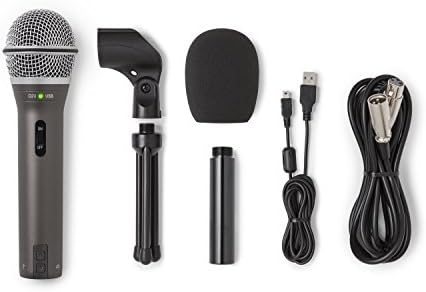
- Dynamic handheld microphone with XLR and USB-C
- Plugs directly into any computer with a USB-C interface
- Includes Tripod Desktop Stand, Tripod Extension, Mic Clip, Windscreen, USB-C Cable and XLR Cable
The Samson Q2U (or current pack versions of the same model) remains one of the most recommended entry-level dual-output dynamic mics. It includes a stand, cables, and a windscreen in many bundles and costs substantially less. Sound quality and build are a clear step below the Shure and RØDE options, but for pure beginners testing whether they will stick with podcasting, it is a low-risk starting point.
Practical Setup Guide for the Shure MV7 / MV7+
A good microphone only helps if placement and levels are reasonable. Research and owner reports converge on a few reliable habits:
- Mount it properly. A boom arm keeps the mic out of the camera frame and lets you stay consistent with distance. Desk stands work for temporary setups.
- Stay close. Dynamic cardioid mics thrive at 2–6 inches from the mouth. Speaking slightly off-axis (a few degrees) reduces plosives without needing an external pop filter in many cases. The MV7+ digital popper stopper helps further.
- Set gain for peaks around −12 dB to −6 dB. Too low and you raise noise later; too high and you risk clipping. Auto Level Mode on the MV7+ is designed to reduce the need for constant manual adjustment.
- Monitor with headphones. Use the onboard headphone jack so you hear what the mic is capturing in real time.
- Treat the obvious noise sources. Close the door, turn off noisy fans if possible, and add soft furnishings. No software denoiser fully replaces a quieter room.
- Record a short test and listen back. Check for sibilance, proximity effect (boomy low end when too close), and background noise before recording a full episode.
Shure publishes user guides and the MOTIV / MOTIV Mix applications that store settings on the device for many of the newer models. Firmware updates are delivered through the same software.
For broader context on starting a show, Shure’s own educational material on choosing microphones for podcasting and home recording is a useful non-competing reference (see the external links section).
Who Should Buy Which Model?
Use this decision matrix as a quick filter.
Buy the Shure MV7+ if:
- You want one mic that works with a laptop today and an interface later
- You value modern USB-C, a visible LED panel, and strong onboard DSP
- Your room is untreated or only lightly treated
- You stream, podcast, or record voice-over and want fewer post-production fixes
Buy the original Shure MV7 if:
- It is meaningfully cheaper than the MV7+ at the moment you check
- You are comfortable with the existing MOTIV software and the older USB connector style on some units
- You still want hybrid connectivity
Buy the Shure MV7X if:
- You already own a good audio interface with enough clean gain
- You prefer a pure analog signal path
- You want Shure’s capsule character at a lower price
Buy the Shure SM7B if:
- You are building a more permanent studio setup
- You have (or will buy) sufficient preamp gain
- You specifically want the classic SM7B sound and are willing to manage gain staging
Consider the RØDE PodMic USB if:
- You want hybrid connectivity and DSP at a lower price point than the MV7+
- You like the RØDE ecosystem and software
Consider the Samson Q2U if:
- You are on a tight budget and just need a working dual-output dynamic mic to start
Common Buyer Concerns Answered from Listing Patterns
Does the MV7 need a Cloudlifter or similar booster?
On USB, no. On XLR, many users run it successfully into modern interfaces without an extra booster because the MV7 family is more sensitive than the SM7B. Very quiet interfaces may still benefit from additional gain.
Is the MV7 good for streaming and gaming?
Yes. The cardioid pattern and voice isolation help keep keyboard and room noise lower than many condensers. The MV7+ is also marketed with OBS certification language on current listings.
Can I use it with a phone or tablet?
Shure documents MFi certification and compatibility paths for many iOS devices (often requiring appropriate cables or adapters). Android support varies by device; check Shure’s current compatibility notes before relying on mobile-only recording.
How does it handle plosives and sibilance?
Close technique plus the digital or physical pop filtering on the MV7+ helps. Some voices still benefit from a small external pop filter or a gentle high-shelf cut in the DAW.
Is the all-metal body heavy?
It has noticeable weight (roughly 550–575 g depending on model). A sturdy boom arm is recommended for long sessions.
Spec Snapshot (Research Summary)
| Feature | MV7+ | Original MV7 | MV7X | SM7B |
|---|---|---|---|---|
| Primary outputs | USB-C + XLR | USB + XLR | XLR only | XLR only |
| Onboard DSP | Strong (device + app) | Via MOTIV app | None | None |
| Headphone jack | Yes | Yes | No | No |
| Typical use case | Hybrid creators | Hybrid creators | XLR setups | Broadcast / studio |
| Relative sensitivity | Higher (easier gain) | Higher | Higher than SM7B | Lower (needs gain) |
| Approx. price band | $269–$299 | ~$298 | ~$199 | $399–$439 |
Prices fluctuate. Always check the live Amazon listing.
External Resources Worth Reading
For deeper technical or educational context from non-competing sources:
- Shure official MV7+ product page — current features, software, and manufacturer guidance
- Shure insights articles on choosing microphones for podcasting and home recording (available on the same domain) — practical placement and workflow advice
- Published frequency-response and polar-pattern data in Shure specification sheets — useful if you want to compare measured response rather than marketing language
These sources help you understand the design intent without relying solely on retailer copy.
Frequently Asked Questions
Is the Shure MV7 still worth buying in 2026?
Yes for many buyers, especially the MV7+. It remains one of the strongest hybrid dynamic options that balances plug-and-play USB use with a real XLR path for later growth. Confirm current pricing and stock on Amazon before deciding.
What is the difference between the Shure MV7 and MV7+?
The MV7+ adds USB-C, a multi-color LED touch panel, improved Auto Level Mode, a real-time denoiser, digital popper stopper, reverb options, and other onboard DSP that can be stored on the device. The original MV7 relies more on the MOTIV software for processing and uses an older USB connector style on many units.
Do I need an audio interface with the Shure MV7?
Not for basic USB recording. You need an interface (or mixer) only if you choose to use the XLR output or buy the XLR-only MV7X / SM7B.
Is the Shure MV7 better than the Blue Yeti or similar condensers?
For untreated rooms and close-mic speech, most dynamic options (including the MV7 family) reject more ambient noise than multipattern USB condensers. Condensers can sound more detailed in quiet, treated spaces. The “better” choice depends on your room and voice.
Can the Shure MV7 replace an SM7B?
For many solo podcasters and streamers, yes in practical daily use. For listeners and engineers who specifically want the classic SM7B tone and already have the supporting gain chain, the SM7B still holds a distinct place.
What accessories do I actually need?
A solid boom arm, a pair of closed-back headphones for monitoring, and (optionally) a small pop filter. An external audio interface is only required for pure XLR workflows.
Does the MV7 work with Zoom, Teams, Discord, and OBS?
Yes. Once the computer recognizes it as an audio input device, it appears in the input list of standard communication and streaming software. The MV7+ is frequently listed with OBS-related marketing language on current retail pages.
How long does the warranty last?
Shure typically offers a limited manufacturer warranty (commonly two years on these models; confirm the exact terms on the product packaging or Shure support site at the time of purchase).
Conclusion
The Shure MV7 family continues to solve a real problem in 2026: giving creators broadcast-style dynamic microphone performance without forcing an immediate investment in a full XLR chain. The current MV7+ is the most complete package for most people who want USB-C, useful onboard processing, and a future-proof XLR output. The original MV7 remains a solid hybrid if the price is attractive. The MV7X and the classic SM7B serve buyers who already live in the XLR world.
Match the mic to your room, your current gear, and how soon you expect to expand. Place it close, set levels carefully, and listen to short test recordings before you commit to a long session. That process matters more than any single brand claim.
If you are also building out the rest of a home recording or streaming desk, related gear guides on this site cover wireless microphones, headsets for calls, and other practical pieces of a remote-work or creator setup.
As an Amazon Associate I earn from qualifying purchases.
All recommended products were checked as currently listed and available on Amazon.com. Prices move; always verify the live page before purchasing.

MD.HASAN is an experienced SEO expert and amazon products review writer passionate about helping people find right products on amzon for buy without confusion. With 4 years of hands-on experience in content strategy and search engine optimization, he specializes in writing SEO-friendly blog posts that rank, engage, and convert.


