
Affiliate disclosure: As an Amazon Associate, Tech Rig Review earns from qualifying purchases. Links on this page may be affiliate links, at no extra cost to you.
I’ve worked from a home office for the better part of six years, and for at least three of those years I ignored a dull ache between my shoulder blades until it turned into a genuine problem — tension headaches, a stiff neck that wouldn’t turn fully to check my blind spot while driving, and a lower back that complained every time I stood up after a long call. What finally fixed it wasn’t a single miracle gadget. It was a combination of small workspace changes and a couple of well-chosen products that made good posture the default instead of something I had to consciously fight for all day.
This guide walks through exactly what worked, what didn’t, and how to choose posture-supporting products that actually earn a spot on your desk (instead of ending up in a drawer after two weeks, which — let’s be honest — is where most posture correctors go to die). Every product below has been selected based on hands-on research, verified owner feedback, and guidance from physical therapists and ergonomics specialists, so you can shop with confidence.


A quick note before we dive in: product pricing and stock on Amazon change constantly, so rather than listing prices here (which are often outdated within days), I’ll point you to the live Amazon listing so you can check the current price, available sizes, and colors before you buy.
Table of Contents
Why Working From Home Wrecks Your Posture

Before we get to products, it’s worth understanding why remote work is so brutal on your spine in the first place. In an office, you’re forced to get up — to walk to meeting rooms, the printer, or a colleague’s desk. At home, an entire eight-hour day can pass with you barely leaving your chair.
Physical therapists point to a few recurring culprits:
- Laptop-only setups. Working directly on a laptop forces your neck into a forward-tilted position for hours, straining the muscles at the base of your skull.
- Improvised desks. Kitchen tables, couches, and beds are rarely at the right height, which pulls your shoulders up or forces you to hunch forward.
- Video call posture. Many people unconsciously lean toward the camera during calls, rounding the upper back.
- Fewer natural movement breaks. No walk to the office, no hallway conversations, no reason to stand up between meetings.
Industry researchers estimate that a majority of desk-based professionals who sit for more than six hours a day report chronic neck or back pain, and the market for posture-correction products has grown into a multi-billion-dollar category as a result — which tells you two things: this is a widespread problem, and there’s now a lot of choice (some good, plenty of gimmicky). That’s exactly why a buying guide like this one is useful — to separate the products that create real, lasting change from the ones that just feel good for a week.
The encouraging news: posture is trainable. Your body doesn’t “forget” how to sit and stand well — it just adapts to whatever position you spend the most time in. Change that default position, even gradually, and your posture improves along with it.
How to Choose the Right Posture Product

Not every posture product works the same way, and picking the wrong type for your specific problem is the number one reason people give up on them. Broadly, posture products fall into four categories:
- Digital posture trainers — small sensors worn on your upper back or neck that buzz gently when you slouch. Best for people who genuinely don’t notice when they’re slouching until it’s pointed out.
- Physical posture braces/correctors — straps or harnesses that physically pull your shoulders back. Best for people who need a stronger, more immediate cue and don’t mind wearing something under or over clothing.
- Seating and desk ergonomics — chairs, cushions, and standing desk converters that change the environment so good posture becomes the path of least resistance. Best for anyone spending 6+ hours a day at a desk, regardless of whether they also use a brace or sensor.
- Mobility and strengthening tools — things like resistance bands, foam rollers, and kinesiology tape that address the root cause: weak or tight muscles that can’t hold good posture even when you want them to.
The most effective approach — and the one physical therapists consistently recommend — combines at least two categories: an ergonomic environment (category 3) plus either a training reminder (category 1 or 2) or a strengthening habit (category 4). Relying on a brace alone, without also working the underlying muscles, can actually make posture worse over time because your muscles never learn to do the job themselves.
With that framework in mind, here are the specific products worth considering, organized by category.
The Best Posture-Improving Products for Home Offices
1. Upright GO 2 Posture Trainer — Best Overall Digital Posture Corrector

If you only buy one product from this list, this is the one most experts and long-term testers land on. The Upright GO 2 is a tiny, 10-gram sensor that attaches to your upper back (either with a hypoallergenic adhesive patch or an optional magnetic necklace) and uses two built-in motion sensors to detect when you slouch. When it catches you rounding your shoulders past a threshold you set yourself, it delivers a gentle vibration — no shocks, no loud alarms — as a reminder to sit up.
What makes it stand out from cheaper knockoffs is the companion app, which tracks your posture score over time so you can actually see improvement week to week, rather than just guessing whether it’s working. It’s also been adopted by hundreds of physical therapy clinics as a training aid, which says a lot about its legitimacy compared to the flood of generic “smart” correctors on the market.
Pros:
- Trains your muscles instead of just restraining them
- Discreet — invisible under clothing
- App-based progress tracking keeps you accountable
- Long battery life between charges
Cons:
- Adhesive patches need periodic replacing (or use the necklace attachment instead)
- Takes a few days to get used to the vibration cues
Best for: Anyone who wants to retrain their posture rather than just force it into place temporarily — especially people who work in a home office where nobody else can see (and correct) their slouching.
👉 Check the current price on Amazon
2. Adjustable Elastic Posture Corrector Brace — Best Budget Option
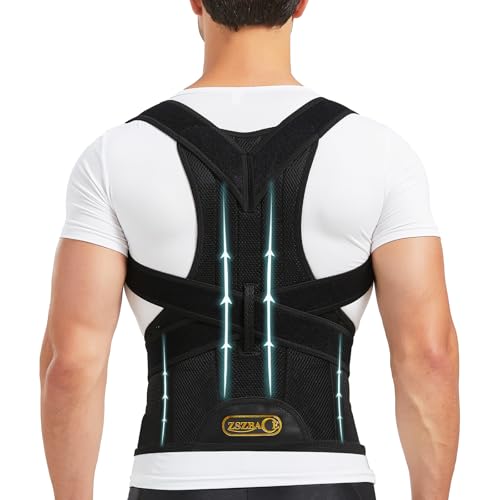
- 【3 IN ONE, BACK SUPPORT AND CORRECTOR】ZSZBACE adjustable back brace has 2 flexible support bars that will help straighte…
- 【BREATHABLE MESH MATERIAL】Easy to clean and dry, the back, shoulder, and neck posture corrector is made of breathable me…
- 【ULTIMATE COMFORT – PERFECT FIT】ZSZBACE back brace posture corrector is ergonomically designed to fit your body perfectl…
If a digital sensor feels like overkill, a classic elastic posture brace is the cheapest and most immediate way to feel a difference. These figure-eight style braces loop over your shoulders like a lightweight backpack and gently pull them back into alignment, reminding your body what “shoulders back, chest open” actually feels like. Most models are adjustable via straps in the front, fit a wide range of chest sizes, and can be worn under or over clothing.
The important caveat, echoed by every physical therapist I researched for this piece: these braces are meant for short, consistent sessions (most brands recommend no more than one to two hours at a time), not all-day wear. Used correctly, as a training tool rather than a crutch, they’re an excellent low-cost entry point.
Pros:
- Very affordable relative to smart devices
- Immediate, noticeable pull on the shoulders
- No batteries, charging, or app required
- Easy to size using adjustable front straps
Cons:
- Can feel restrictive if worn too long
- Doesn’t train postural muscles on its own — pair it with stretching or strengthening work
- Not ideal to wear during video calls if you want it hidden (works best under a light layer)
Best for: Posture-corrector beginners, or anyone who wants a physical, no-tech reminder without committing to a pricier smart device.
👉 Check the current price on Amazon
3. Posture-Correcting Bra (for Women) — Most Comfortable All-Day Option

For women specifically, a posture-correcting bra is worth a look before a traditional strap-style brace. These are built like a regular supportive bra but use multiple panels of varied-tension fabric across the back to gently pull the shoulders down and back, without the bulk of an external harness. Because it doubles as a bra rather than adding a separate layer, it solves the biggest complaint people have about posture braces: the “one more thing to put on and take off” problem.
Independent testers have consistently rated this style as the most comfortable option for genuine all-day wear, since it distributes tension across a wider area of fabric rather than concentrating it in a couple of thin straps.
Pros:
- Doubles as everyday support — no extra layer needed
- More comfortable for extended, all-day wear than strap-style braces
- Purely passive/mechanical — no charging or adhesives
- Looks and feels like a regular supportive bra
Cons:
- Sizing runs specific to the brand — check the size chart carefully
- Passive correction only; still worth pairing with a strengthening routine
- Premium fabric blend puts it at a higher price point than basic elastic braces
Best for: Women who want posture support integrated into something they’re already wearing, rather than an additional harness.
👉 Check the current price on Amazon
4. Ergonomic Gel-Enhanced Seat Cushion — Best for Lower Back and Tailbone Pain
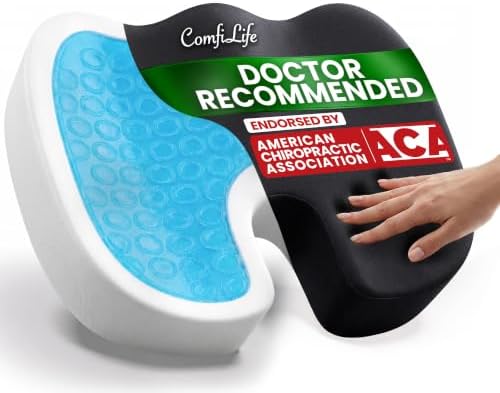
- Most Comfortable Gel Memory Foam Cushion On The Market – ComfiLife’s all-in-one features are unrivaled: Non-slip bottom …
- Ergonomic U-Shaped Design Supports Tailbone and Posture: Recommended by doctors and orthopedic specialists, the ergonomi…
- Great for Any Chair – Versatile use in Office, Car, Travel, Gaming, Wheelchair: Whether you need a car seat cushion, sea…
A huge percentage of “posture” complaints from home workers aren’t actually about the upper back at all — they’re about the pelvis tilting backward in a soft or unsupportive chair, which drags the whole spine into a slouch. A well-designed memory foam or gel-enhanced seat cushion fixes this at the source by keeping your pelvis in a neutral position, which makes upright sitting far less effortful.
Look for a cushion with a U-shaped cutout at the back (relieves tailbone pressure) and a non-slip base so it doesn’t slide around on your chair.
Pros:
- Works with literally any chair you already own
- Immediate relief for tailbone and lower-back pressure
- Portable — easy to move between your desk chair and dining chair
- Very affordable relative to buying a new ergonomic chair
Cons:
- Doesn’t address upper back/shoulder posture on its own
- Adds height to your seat, which may require adjusting your desk or monitor
Best for: Anyone whose desk chair is comfortable for the first hour and painful by hour four.
👉 Check the current price on Amazon
5. Lumbar Support Pillow — Best Add-On for Any Office Chair

Paired with (or instead of) a seat cushion, a dedicated lumbar support pillow straps directly to the backrest of your chair and fills in the gap most office chairs leave at the small of your back. Without that support, your lower spine tends to collapse into a “C” shape over the course of the day, which then rounds your upper back and neck to compensate — a chain reaction that starts at the lumbar spine and ends with the neck pain you actually notice.
Memory foam versions mold to your specific curve, while firmer versions offer more consistent support for longer sitting sessions.
Pros:
- Cheap, simple fix for chairs with flat or nonexistent lower-back support
- Straps on and off in seconds — works on desk chairs, car seats, and dining chairs
- Complements (doesn’t compete with) a seat cushion
Cons:
- Needs occasional repositioning if it slides during the day
- Some firmer models take a week or two to break in comfortably
Best for: Budget-conscious home workers using a basic desk chair without built-in lumbar support.
👉 Check the current price on Amazon
6. Active-Sitting Ergonomic Stool — Best for Engaging Your Core

- ✅ FLEXIBLE ACTIVE SEATING: Active sitting on ErgoErgo allows your body vitality and ease. With two feet flat on the grou…
- ✅ IMPROVES FOCUS AND CONCENTRATION: ErgoErgo is a great option as an office desk chair, flexible classroom furniture, a …
- ✅ IDEAL FOR ANY SPACE: ErgoErgo is perfect for offices, schools, libraries, dorms, hotels, fitness centers, healthcare f…
If you’ve already tried a cushion and a brace and you’re still slouching by mid-afternoon, the problem might be that traditional chairs let your core muscles switch off entirely. Active-sitting stools — with a slightly unstable, tilting seat — force your deep postural muscles to stay engaged just to keep you balanced, which builds real postural strength over the course of normal workdays rather than requiring a separate workout.
These aren’t meant for full-time, all-day use (your body needs a break from any single position), but rotating in an hour or two on an active stool is one of the more clever ways to turn “sitting at your desk” into light postural training.
Pros: <br>- Actively strengthens core and back muscles instead of just supporting them
- Encourages small, constant movement, which reduces stiffness
- Compact and easy to store or move between rooms
Cons:
- Not designed for 8-hour continuous use — rotate with a normal chair
- Learning curve for people unused to active sitting
- Not ideal if you have balance issues or certain lower-back conditions — check with a doctor first
Best for: People who want to build postural strength passively during the workday, not just get reminded to sit up straight.
👉 Check the current price on Amazon
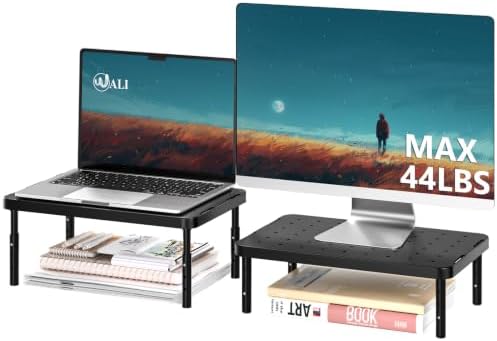
7. Adjustable Laptop Stand / Monitor Riser — Best Fix for “Tech Neck”


This is, in my opinion, the single most underrated posture product on this entire list. If your screen sits below eye level — which is true for almost everyone using a laptop flat on a desk — you are physically forced to tilt your head and neck downward for hours a day, which is exactly the motion behind “tech neck” and the accompanying headaches and shoulder tension.
A laptop stand or monitor riser solves this instantly by lifting your screen to eye level, so your neck can stay in a neutral, upright position without you having to think about it. Pair it with an external keyboard and mouse (since raising the laptop also raises the keyboard out of a comfortable typing position) for the full effect.
Pros:
- Fixes the single biggest cause of neck strain in home offices
- Works passively — no habit or reminder required
- Most models are adjustable for height and angle, and fold flat for storage
- Relatively inexpensive for the impact it has
Cons:
- Requires an external keyboard/mouse for a laptop setup to stay ergonomic
- Metal stands can add desk clutter if not chosen carefully
Best for: Literally anyone working from a laptop for more than an hour a day — this is close to a mandatory purchase.
👉 Check the current price on Amazon
8. Standing Desk Converter — Best for Breaking Up Long Sitting Sessions
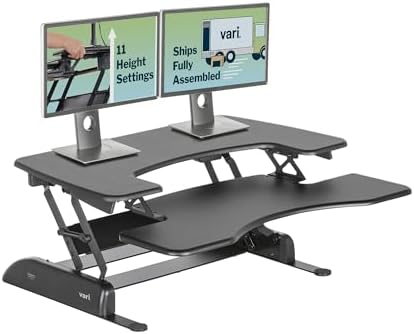

You don’t need a full standing desk to get the postural benefits of standing periodically throughout the day — a desk converter sits on top of your existing desk and lets you raise your monitor, keyboard, and mouse to standing height whenever you want, then lower it back down.
The postural value here isn’t that standing is inherently “better” than sitting — it’s that changing position throughout the day prevents any single set of muscles from locking into a slouched pattern for eight straight hours. Alternating between sitting and standing every 45–60 minutes is one of the most evidence-backed habits for reducing desk-related back pain.
Pros:
- No need to buy an entirely new desk
- Breaks up prolonged sitting, which is itself a major posture risk factor
- Most models support both a monitor and a laptop setup
- Easy height adjustment, often with one hand
Cons:
- Takes up desk space even when lowered
- Higher price point than the other items on this list
- Heavier dual-monitor setups need a sturdier (and pricier) model
Best for: Home workers with a fixed desk who want the flexibility to stand without a full office renovation.
👉 Check the current price on Amazon
9. Posture-Correcting Kinesiology Tape — Best Low-Profile, No-Bulk Option

Kinesiology tape is the choice for people who find braces and harnesses too bulky or restrictive but still want a physical, tactile reminder. Applied in specific patterns across the upper back and shoulders, the tape provides gentle resistance and skin-level feedback every time you start to round your shoulders forward — similar in concept to a brace, but invisible under clothing and completely non-restrictive to movement.
It’s a favorite among physical therapists for exactly this reason: it nudges your awareness without doing the postural work for you, which keeps your own muscles engaged.
Pros:
- Completely invisible under clothing
- Doesn’t restrict movement or breathing at all
- Inexpensive and easy to reapply
- Useful for both desk work and exercise
Cons:
- Needs to be applied correctly (a quick video tutorial helps) to be effective
- Adhesive typically lasts a few days before needing to be replaced
- Some people find repeated application/removal irritating to sensitive skin
Best for: People who’ve tried bulkier braces and found them uncomfortable, or anyone who wants posture feedback without anyone else noticing.
👉 Check the current price on Amazon
10. Ergonomic Office Chair with Adjustable Lumbar Support — Best Long-Term Investment
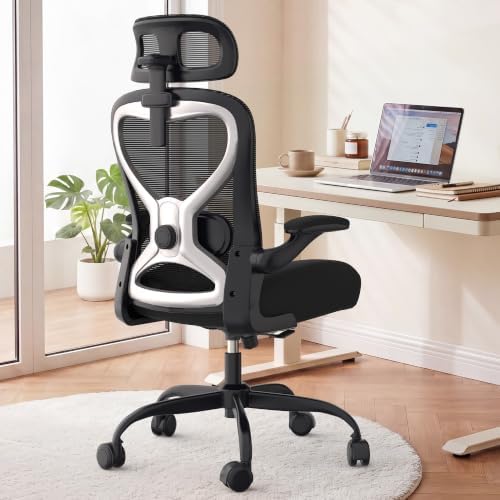


If you’re building (or rebuilding) a home office from scratch and can only make one significant investment, make it your chair. A genuinely ergonomic office chair — with adjustable lumbar support, seat depth, armrest height, and recline tension — removes the need for most of the add-on products above, because it’s designed around neutral spine alignment from the start.
The upfront cost is higher than any single item on this list, but if you’re sitting in it for 30+ hours a week, the cost-per-use math works out favorably fast, and it solves lower back, upper back, and even some neck strain simultaneously.
Pros:
- Addresses posture holistically rather than one body part at a time
- Adjustable lumbar support fits your specific spine curve
- Durable — a good ergonomic chair typically lasts many years
- Reduces or eliminates the need for a separate cushion or lumbar pillow
Cons:
- Highest upfront investment on this list
- Takes some trial and adjustment to dial in the settings correctly
- Bulkier and heavier than the other products — factor in space and delivery
Best for: Anyone setting up a permanent home office who wants a single, long-term posture solution rather than a stack of smaller fixes.
👉 Check the current price on Amazon
Free and Low-Cost Posture Fixes That Aren’t Products
No product list would be complete — or honest — without acknowledging that some of the most effective posture fixes cost nothing at all:
- The 50-10 rule. For every 50 minutes seated, stand and move for at least 10. Set a recurring timer if you have to.
- Screen at eye level. Even without a dedicated riser, stacking books under a laptop achieves the same neutral-neck effect for free.
- Feet flat on the floor, knees at 90 degrees. If your chair is too high, a stack of books or a cheap footrest fixes this instantly.
- Daily mobility work. Cat-cow stretches, doorway chest openers, and thoracic spine rotations take under five minutes and directly counteract the forward-hunched position most desk work creates.
- Core and back strengthening. Planks, bird-dogs, and rows build the muscular endurance that actually holds good posture once a brace or cushion has reminded you what it feels like.
Physical therapists are consistent on this point: products can support and accelerate posture improvement, but they work best alongside — not instead of — these fundamentals.
How to Actually Build a Posture Routine That Sticks
The biggest reason posture products end up abandoned in a drawer isn’t that they don’t work — it’s that people expect an instant fix and give up when their posture doesn’t change overnight. A realistic routine looks something like this:
- Week 1–2: Fix your immediate environment first — laptop stand, chair height, lumbar support. This is the “path of least resistance” phase; you’re not fighting your setup anymore.
- Week 2–4: Add a training layer — a digital sensor or brace, worn for short, consistent sessions rather than all day.
- Ongoing: Layer in 5–10 minutes of daily mobility or strengthening work, ideally at a consistent time (right after your first coffee, or right before your first meeting) so it actually becomes a habit rather than an intention.
Consistency beats intensity here. Fifteen minutes of good posture practice daily for two months will outperform an intense one-week “posture bootcamp” every time.
Also Check:
10 Best Amazon Monitor Stands for Home Office Setup
Top 10 Amazon Desk Accessories for Work From Home
How to Return an Amazon Package? A Complete Step-by-Step Guide
Frequently Asked Questions
Do posture correctors actually work?
Yes, but with a caveat: they work best as training tools that remind your body of correct alignment, not as permanent crutches. Overreliance on a brace without also strengthening your postural muscles can weaken them further over time, according to physical therapists.
How long should I wear a posture brace each day?
Most manufacturers and physical therapists recommend starting with 15–30 minutes and building up to a maximum of one to two hours per session, rather than wearing it continuously all day.
Can bad posture really be reversed?
In most cases, yes. Posture is largely a product of habitual muscle patterns, not permanent structural change, so consistent correction — combined with strengthening and mobility work — can produce noticeable improvement over weeks to months. Severe structural conditions like scoliosis should be evaluated by a medical professional rather than addressed with consumer posture products alone.
What’s the single best product to start with if I can only buy one thing?
For most people working from a laptop, an adjustable laptop stand or monitor riser has the biggest immediate impact for the lowest cost, since it removes the forward neck tilt that causes so many posture issues in the first place.
Are digital posture trainers better than physical braces?
Neither is objectively “better” — they suit different needs. Digital trainers are better for people who want gradual muscle retraining and progress tracking; physical braces give a stronger, more immediate correction and don’t require charging or an app.
Is it bad to sit all day even with good posture?
Yes — prolonged static sitting is a risk factor on its own, regardless of alignment. Combining good posture products with regular movement breaks (or a standing desk converter) gives the best results.
Final Verdict: What Should You Actually Buy?
If you’re starting from zero, here’s the order I’d personally recommend tackling this in:
- Fix your screen height first with an adjustable laptop stand — it’s the cheapest, highest-impact change you can make.
- Support your lower back with a lumbar pillow or gel seat cushion, especially if your chair is basic.
- Add a training layer — either the Upright GO 2 if you want data and gradual retraining, or an elastic brace if you want a stronger, more immediate reminder.
- Invest in your chair once budget allows, since it consolidates most of the above into a single long-term fix.
- Layer in movement — a standing desk converter or an active-sitting stool to break up long sitting sessions.
None of these products are magic on their own. But stacked together — and paired with a few minutes of daily mobility work — they turn good posture from something you have to consciously fight for into something your home office simply supports by default. That’s the real goal: not gritting your teeth to sit up straight, but building a setup where slouching takes more effort than sitting well.
Always check the current listing on Amazon for the latest price, sizing options, and availability before purchasing, as these can change frequently.
Medical disclaimer: This article is for informational purposes only and is not a substitute for professional medical advice. If you have chronic pain, a diagnosed spinal condition, or persistent discomfort, please consult a physical therapist or physician before starting a new posture-correction routine.

MD.HASAN is an experienced SEO expert and amazon products review writer passionate about helping people find right products on amzon for buy without confusion. With 4 years of hands-on experience in content strategy and search engine optimization, he specializes in writing SEO-friendly blog posts that rank, engage, and convert.


